


Everlane’s sale to Shein is another nail in the coffin for millennial DTC brands
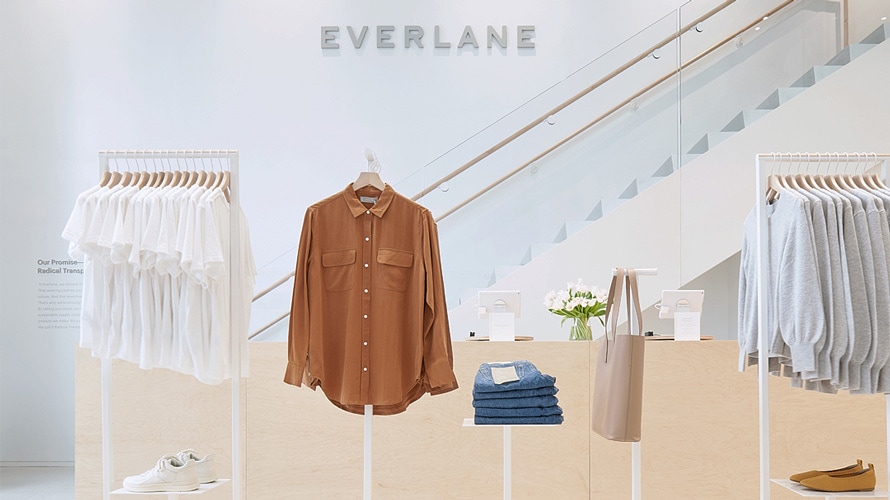
Everlane, one of the early direct-to-consumer darlings, was reportedly sold to Shein by majority owner L Catteron over the weekend.
The deal, first reported by Puck, is worth $100 million and will help cover Everlane’s reported $90 million debt. Everlane and Shein have not publicly issued a statement on the reported deal. Users quickly took to social media to point out the hypocrisy and irony of Everlane selling out to the biggest name in fast fashion. Everlane, founded in 2011, built its brand on the idea of “radical transparency.” It disclosed exactly how much it took to produce each item and where its items were manufactured. In 2012, it even shut down its website to protest the “excess” of Black Friday — though it has since changed course, and for years now, Everlane has participated in the tentpole retail event.
But Everlane’s fire sale is also the latest nail in the coffin of the DTC 1.0 era from the 2010s. In April, Allbirds — whose annual sales declined from $277.47 million in 2021 to $189.8 million in 2024 — sold off its brand assets to American Exchange Group for $39 million. The publicly-traded company then quickly announced it was pivoting to AI computing infrastructure, renaming itself NewBirdAI in the process.
The sales of Allbirds and Everlane represent two death blows to a group of brands from the 2010s. “The millennial DTC brands are truly falling,” as one Reddit user put it. These brands, which include Allbirds and Everlane, but also brands like Warby Parker, Glossier and Away, were often grouped together based on a few commonalities. They embraced minimalist branding. Their core audience was millennials. They raised hundreds of millions of dollars in venture capital, thanks to investors who felt bullish after Dollar Shave Club’s sale to Unilever. And they built their whole value proposition around the fact that they looked, felt and operated differently than traditional brands.
Often, this meant embracing values that the retail industry had long neglected, like sustainability. In 2020, Allbirds became the first brand to label every item with its carbon footprint. But as new brands entered the fray and the Everlanes and Allbirds of the world faced more competitors in both product and distribution, these value propositions didn’t prove as powerful as they used to be. Now, after multiple pivots — both Everlane and Allbirds have cycled through multiple CEOs over the past few years — the bottom has finally fallen out for some of these companies, leaving them with few options but to sell.
Other former poster children of the era have also been going through growing pains. Glossier brought on a CEO last October, its second CEO in under three years. Meanwhile, Rent the Runway co-founder Jennifer Hyman, who was also the company’s CEO, announced she was leaving the venture-backed startup after 17 years.
Everlane’s last publicly announced infusion of money was in 2022, when it secured $90 million in debt financing. Before that, Everlane raised a $85 million Series F in September of 2020, led by L. Catterton.
Mike Duda, investor in DTC brands like Harry’s and Warby Parker and managing partner at Bullish Inc., said the sale news comes as no surprise. “Everlane was heading to spiral for some time.”
As of March, when L. Catterton was reportedly shopping the brand around, Everlane owed back rent to its San Francisco landlords, according to the San Francisco Gazetteer.
“It is a one-two punch with Everlane and Allbirds, who thought that all millennials wanted sustainable fashion,” Duda said. He added that Everlane specifically was an early example of Silicon Valley “having figured out the marketing arbitrage” through cheap Facebook ads. However, Duda said, Everlane’s transparency-geared mission was never going to be enough to weather the brand through changing consumer preferences. “Gen Z shoppers would rather buy a Shein bikini than be caught on Instagram wearing something twice,” Duda said.
There is indeed a sense of fatigue among investors who have long since moved on to hotter, younger brands.
Fan Bi, CEO of turnaround firm The Hedgehog Company, thinks there is a lot of “momentum investing” going on right now. Investors want to pour money into businesses that are growing rapidly, like Grüns or Poppi. And it’s tough to make the case for why they should back 10- or 15-year-old DTC brands like Allbirds or Everlane that are stagnant or declining.
Bi doesn’t think that the sales of Allbirds and Everlane mean that the DTC business model is dead. Rather, he thinks it’s a tough time for venture-backed DTC fashion brands, in particular. “You haven’t seen early-stage growth investment really going into fashion,” he said. One of the few notable anomalies is Quince, which raised $500 million at a $10.1 billion valuation earlier this year.
But Quince’s main differentiator, he argues, is price – its tagline is “high quality essentials, radically low price.” Meanwhile, 2010-era DTC brands like Allbirds and Everlane tried to sell people on a point of view – one that put sustainability at its core. And that point of view just hasn’t proven alluring enough to keep customers around, and to keep the businesses growing.
In 2026, Duda said demand for products from the likes of Everlane and Allbirds, which emphasize sustainability as a core differentiator, is simply too low among a wider consumer base. That has stalled the hyper-growth rate that investors have come to expect from venture-backed brands, which can no longer justify their valuations.
Duda agreed that Quince has taken the Everlane playbook and adapted it to a wider audience by offering affordable versions of luxury goods. In turn, Quince has become one of the few apparel brands able to attract venture capital. “I don’t know what their numbers look like, but they [Quince] seem to be penetrating a broader sphere of customers,” Duda said. Whether that hot streak will take Quince’s DTC operation further than Everlane is to be determined.
Bi said that venture-backed DTC brands that are declining can focus on profitability, rather than growth, to squeeze out the money needed to keep funding the business. And that’s what Allbirds tried to do – it closed all of its full-price stores in the U.S., as just one example. But as Allbirds struggled to define its brand identity under new leadership (it brought on Joe Vernachio as its COO in 2024), it kept resorting to promotional activity to move product, ultimately hurting its gross margin. In turn, it kept reporting net losses, losing $20.3 million during the third quarter of 2025.
One thing that Everlane, Allbirds, and other millennial-era DTC darlings have in common is that, for years, they had a determination to stick with their DTC-only identity. Both Glossier and Allbirds rapidly opened their own stores following the pandemic, only to recently scale back on underperforming locations. Both brands also finally got into wholesale in recent years, with Allbirds launching in Nordstrom in 2022 and Glossier entering Sephora in 2023. To date, Everlane is still primarily sold through its own website and stores with virtually no wholesale partners. The brand finally launched on Amazon in early 2026.
Duda said that the recent changes these companies have made may have come too late. “Not all businesses are meant to go up and right forever,” Duda said. “If you don’t innovate enough as you go, it will be difficult to survive.”