


Kraft Heinz wants to regain market share for its iconic foods like Kraft Mac & Cheese and Capri Sun
Kraft Heinz has been on a transformation journey in the last few years, as it tries to modernize its portfolio and court younger consumers.
Earlier this year, the company halted its planned split, first announced in 2025. Now, the message Kraft Heinz reinforced during its first-quarter earnings report on Wednesday is that it is focused on turning around the business as one entity.
Currently, Kraft Heinz is focused on specific innovations across its most notable brands, like Kraft Mac & Cheese and Capri Sun, to help reposition them against the backdrop of changing consumer and nutritional preferences. That includes adding new protein-packed products or releasing new lines that tap into trending flavors. Thus far, the move appears to be working, as Kraft Heinz reported quarterly sales of $6.05 billion, beating Wall Street’s expected figure of $5.89 billion.
“Pausing the split freed up lots of resources, as we said it would, and we turned our attention, and the attention of this entire organization, to get off to a strong start, and that’s exactly what we did,” Kraft Heinz CEO Steve Cahillane said.
The proposed split was set to have the Kraft and the Heinz portions of the mega-conglomerate operate as two separate publicly traded companies. The company had said that the respective portfolios, which would have divided the shelf-stable meals and the food and beverage brands, would operate more efficiently and cater to changing consumer behaviors.
But, Kraft Heinz is still focused on adapting to changing consumer behaviors, just as one business unit.
One big focus for the company is to regain its macaroni and cheese market share, which has slipped as the iconic blue box has lost its luster against both startup and private-label players.
Kraft’s boxed macaroni and cheese was introduced nearly a century ago, during the Great Depression, and enjoyed vast popularity over the decades. While it’s still the top-selling in the country, that status is rapidly changing. Kraft Mac & Cheese’s market share slipped from 45% in 2022 to about 39% in 2026, per Circana data.
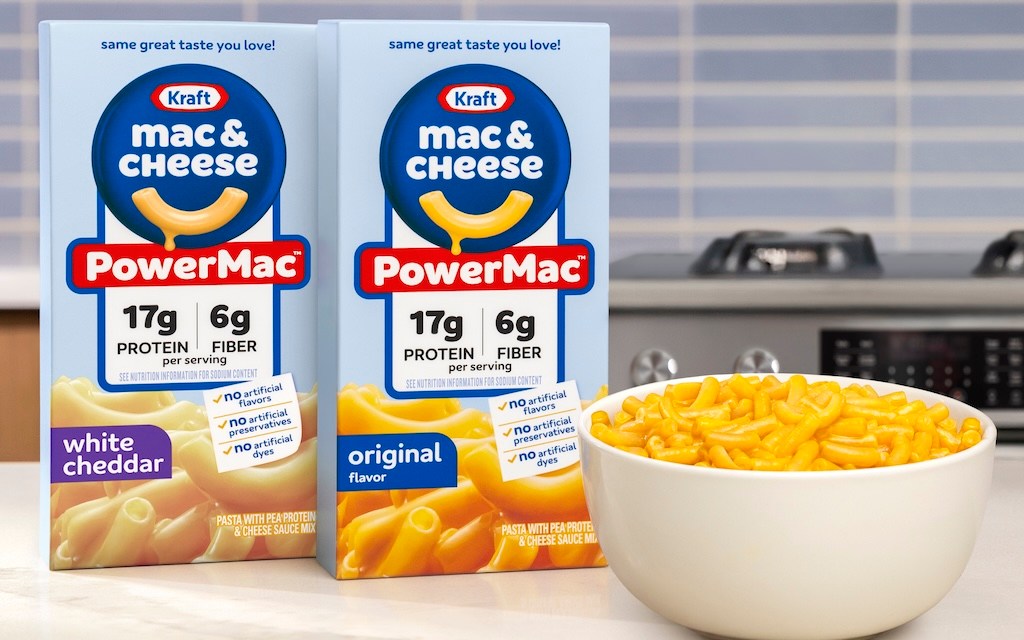
So, years after protein-packed boxed mac and cheese hit the market — from startups like Goodles and Banza — Kraft Heinz finally announced its PowerMac line in March and rolled it out to retail shelves in April. This version of the beloved classic delivers 18 grams of protein and six grams of fiber per serving. This spring, Kraft Heinz also rolled out a restaurant-inspired Kraft Mac & Cheese line, with flavors like Parmesan pesto, Romano cacio e pepe and Monterey Jack caramelized onion.
The bet on better-for-you is a big one for Kraft Heinz. On the Q1 earnings call on Wednesday, Cahillane assured shareholders that the company’s new innovations are taking hold.
“We’ve seen good returns on the investments that we’ve made, and that’s where we’re leaning in,” Cahillane said on the earnings call. With the PowerMac line, “[It is] too early to see any sell-out data, but the sell-in was outstanding, 35,000 accounts right now as we speak,” said Cahillane.
Cahillane went on to single out other recent better-for-you improvements across the Kraft Heinz portfolio, like Philadelphia Lactose-Free and Capri Sun Hydrate. He said the Capri Sun line in particular had “a big opportunity to continue the momentum that was built last year.”
“We’ve got a Lunchables renovation, which is coming next month. We’ll be investing against that,” he said. “We’ve seen a good turnaround in Lunchables, which started at the end of last year.”
These types of reformulations have become a go-to strategy for many legacy brands, in order to continue competing. It’s a dilemma that many legacy consumer packaged goods conglomerates are facing, as they deal with economic challenges, inflation and changing diet preferences. These trends are also being accelerated by factors like the rise of GLP-1 medications and overall interest in longevity.
Renata Medeiros, head of food, beverage and agribusiness Americas at ING, said major CPG companies are rapidly responding to changing health and wellness habits among Americans.
“GLP-1 medications are accelerating trends that are already building,” Medeiros said. For one, people on these medications are becoming far more intentional about what their meals actually contain. “
That’s colliding with a broader health consciousness movement that was already pulling shoppers away from traditional packaged foods toward options that deliver real nutritional value, particularly protein,” Medeiros said.
She pointed to challenger brands like Banza and Goodles, which offer high levels of protein and fiber. She said these companies “didn’t just find a niche, they revealed how much room legacy players had left on the table by prioritizing taste and convenience over function.”
Kraft Heinz isn’t the only CPG player pushing lots of new high-protein products. Medeiros pointed to General Mills releasing a new Wheaties line with added protein as another, similar move. Meanwhile, this year, Nestlé is leaning further into functional nutrition with the launch of nutritional drink line Nestlé Vital, said to target those looking for healthy aging solutions. “These are reactions to a consumer base that is reading labels more carefully than ever,” said Medeiros.
The challenge for legacy brands is that the rebranding effort has to be credible, Medeiros said, especially when private label alternatives are quickly closing the quality gap and startups continue building their entire identity around the better-for-you promise that the big players are now scrambling to match.
“The response from established CPG companies has been predictable but necessary,” Medeiros said. “Reformulate, repackage and reposition.”