


‘A command-and-control operator’: Kroger’s new CEO was a key leader in transforming Walmart
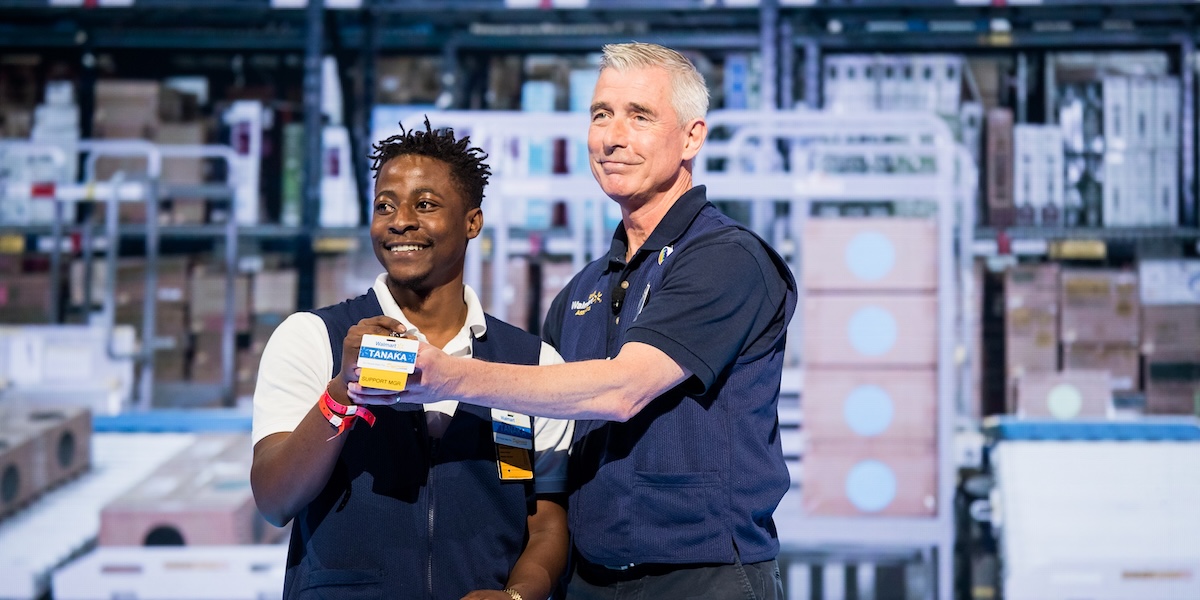
Expectations are high for Kroger’s newly named CEO, considering his reputation in the industry and track record at the largest player in big-box retail.
Earlier this week, Kroger named Greg Foran as CEO, effective immediately. He succeeded Ron Sargent, who was interim CEO since March, when Rodney McMullen resigned following an investigation into his “personal conduct.”
Foran is best known for his tenure as president and CEO of Walmart U.S. from 2014 to 2019, where he delivered positive comp sales growth for 20 consecutive quarters, according to a Kroger news release. He also held other leadership positions in Walmart’s international businesses, such as in China. More recently, he had been CEO of Air New Zealand since 2020, leading the airline while the pandemic disrupted global travel.
Ross Cloyd, director of grocery retail insights for Kantar — and a former Frito-Lay analytics executive who worked with Walmart while it was led by Foran — said he believes someone pushing “back-to-basics” is exactly the kind of leader Kroger needs.
“When [customers] don’t have an enjoyable experience, or when there are out-of-stocks, those are pain points,” Cloyd said. He added that he personally has seen outdated price tags and large, empty areas in Kroger stores.
While at Walmart, Foran focused on cleaning up its stores, equipping them to support e-commerce and creating new opportunities for employees. This may be positive news for those who want Kroger to reinvest in its store fleet and its e-commerce capabilities, while Walmart presents a threat as it continues to grow its reputation with high-income customers.
As Jason Del Rey, founder and author of AI and commerce newsletter “The Aisle,” put it, the “unglamorous moves” that Foran made while at Walmart “produced meaningful financial and cultural impact.”
“Walmart’s core brick-and-mortar business was a pretty much a mess when he got there, and he more than cleaned it up,” he told Modern Retail in an email.
Now, at Kroger, Foran faces the challenge of realigning the company after its failed endeavor to merge with Albertsons, which cost it $1 billion, as well as the underperformance and closure of its automated fulfillment centers. During its third-quarter earnings in November, Kroger recorded a $2.6 billion impairment charge because of the closure of three of these facilities.
Preparing Walmart for a new era
On the e-commerce front, Foran led Walmart while it expanded grocery pickup throughout the country and launched “Pickup Towers” that were in stores from 2017-2018. He was also there when Walmart started testing grocery delivery and acquired e-commerce company Jet.com for $3 billion in cash. In 2017, Walmart also introduced a new returns experience where customers could start the return process from their phones.
“Foran was not the architect of Walmart’s e-commerce strategy, but he was a critical gatekeeper and executor,” Del Ray said. “He oversaw the teams that built and executed what became one of the strongest curbside grocery pickup businesses in U.S. retail, which was a business line that ultimately has proven central to Walmart’s omnichannel strategy.”
Del Rey added that Foran’s teams didn’t build the technology behind online grocery pickup, but they ran how it would function in the real world. Cloyd said that when he was at Frito-Lay, Walmart focused heavily on making sure items were set in the right place so shoppers and employees picking orders could easily find them. “There has got to be a huge opportunity … for just getting back and having that pulse of the stores and how they’re doing,” Cloyd added. “That connects now to the digital world.”
However, Foran often clashed with e-commerce leaders such as former e-commerce head Marc Lore. This is described in Del Rey’s 2019 reporting for Vox on the tensions and e-commerce losses at Walmart following the Jet.com acquisition.
“Those tensions included disputes over who should get credit or penalized for e-commerce performance and frustration with what he viewed as a willingness among digital leaders to burn gobs of money in pursuit of e-commerce growth,” Del Rey said.
“His priority was ensuring that digital ambitions didn’t break store operations or erode financial discipline,” Del Rey added. “In hindsight, even some e-commerce executives came to appreciate that his insistence on operational rigor and accountability laid groundwork that later digital growth depended on.”
Compared to Walmart, Kroger is much earlier in its e-commerce transformation. Kroger is transitioning to using stores and third-party delivery partners for online orders in place of its shuttered automated fulfillment centers. Foran will be tasked with figuring out how to keep the stores running smoothly while also accommodating e-commerce demand and meeting the company’s goal of improving e-commerce profitability by $400 million in 2026.
‘An operator’s operator’
Del Rey previously covered Amazon, Walmart and e-commerce for Fortune and Recode and wrote the book “Winner Sells All,” which tells the story of Foran’s time as CEO of Walmart U.S. Through his reporting, he described Foran as “a command-and-control operator by modern retail standards.”
“He believed real change only happened when leaders got deep into the details,” Del Rey said. “He set extremely high expectations, could be unyielding, and at times used dry humor or sarcasm to make his point.”
Foran visited nearly 200 locations in his first two years at Walmart, according to Del Rey, “and obsessed over fundamentals like assortment, in-stocks and execution.” Del Rey noted that this trait also carried over to his role as CEO of Air New Zealand.
“When the airline’s JFK–Auckland route had early operational challenges after launch a few years ago, he began taking some of the flights on certain days to see the issues firsthand,” Del Rey said. “My brother, who lives in New Zealand, was on one of those trips and remembers Foran in the cabin, working the drink cart and talking with passengers. It’s consistent with how he approached leadership at Walmart, too: Get close to the work.”
While at Walmart, Foran also made major changes to the company’s workforce, overseeing a nearly $3 billion investment in associate wages and training. From 2016-2019, Walmart opened 200 training academies aimed to elevate hourly workers to salaried management positions. He also created 18,000 personal shopper roles by 2017 that didn’t exist when he first started there.
In 2016, the company began changing the greeter position to a new “customer host role,” which sparked criticism around how some workers with disabilities wouldn’t be able to perform the tasks required for the new role. They would have to be able to lift 25 pounds, clean up spills, collect carts and stand for long periods of time, per NPR. Foran responded in 2019 after rolling out the changes to around 1,000 stores, saying greeters would have 60 days to apply for other roles in the store and that the company would help accommodate employees on an individual basis.
“We are confident that we are taking the right steps to do what is necessary for the business, while also treating affected associates with the respect and assistance they deserve as they transition to new opportunities,” Foran wrote in 2019. “We must continue to evolve our business model by improving customer service, lowering prices and developing our associates.”
It’s just one example of how Foran sought to defend some of the moves he made at Walmart, by positioning them as necessary for the evolution of the company’s business model.
Del Rey said that, to younger and more digitally oriented employees, Foran’s leadership style could sometimes feel out of touch.
“His command-and-control style, military metaphors and old-school terminology — he sometimes referred to software engineering teams as ‘IT’ — turned some off,” Del Rey said. “In the broader industry, though, I think Foran is widely seen as an operator’s operator; not flashy, but extremely credible at running large, complex retail organizations.”