


Follett is making a bigger push into private-label merch at its college bookstores
Follett Higher Education, which runs roughly 1,000 campus bookstores, is putting more private-label products on its shelves.
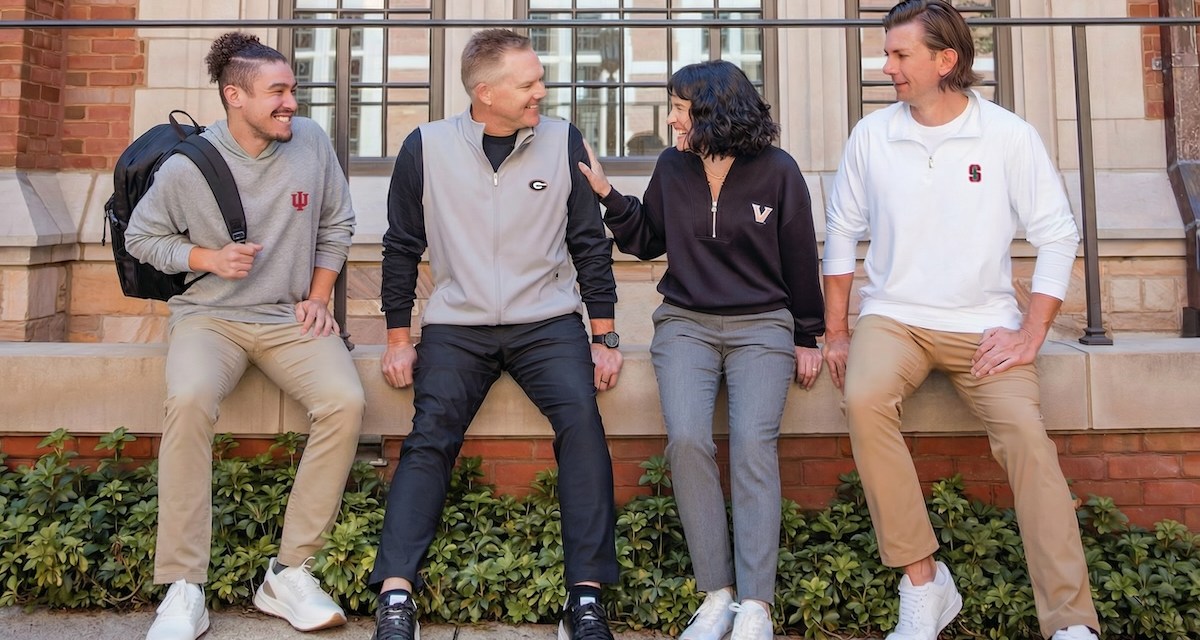
Right now, Follett is focusing on apparel, an area it believes has ample “white space,” said Jeremy Bare, Follett’s chief merchandising officer. In August, Follett rolled out Cameron J, a line of performance apparel like vests, jackets and hoodies. Follett formally announced the launch this month in a press release. As of January, Cameron J is in 190 bookstores and has sold “millions” of dollars’ worth of merchandise, per Follett. Meanwhile, a few years ago, Follett launched Campus United, a line of T-shirts and sweatshirts for $20-$40. Campus United is now in most Follett campus stores and has seen double-digit comp growth.
Follett is making a bigger push into private-label products even as it partners with major retail companies. Follett stores now carry Bath & Body Works items, and Follett has launched pop-ups with IKEA and The Container Store. Follett-operated stores also carry merchandise from big names like Lululemon, Revlon and Maybelline. Follett will continue to work with these partners, but it’s also looking to private-label products to plug gaps, especially when it comes to affordability. Going forward, Follett wants to add private-label goods in categories like drinkware, home decor and school supplies. Follett’s short-term goal is to have 20-25% of its selection be private-label products.
“Our objective is not to replace those [national or global] brands,” Bare said. “Our objective is to do this as incremental pieces of the assortment that fill a void.” A guiding thought, she added, is, “How can we develop pieces that we don’t see on our floor from other vendors today?”
Cameron J, which launched with men’s and women’s styles, is an example of this, Bare said. Follett carries clothing brands like Peter Millar and Johnnie-O, but what it didn’t have was “a more affordable, luxury lifestyle brand” for something like a quarter-zip sweater, Bare said. One of Cameron J’s top items is a men’s long-sleeve hooded waffle top that can be layered under a jacket. “We sold out of that item in many stores in the first month, because it’s a great product that didn’t exist elsewhere [in our stores],” Bare said.
Even as Follett builds out Cameron J, its other global brands — like Peter Millar and Lululemon — continue growing. Cameron J “has not been at the expense of any of our better-and-best brands,” Bare said. Next up for Cameron J is expansion into kids’ styles. It hopes the move will appeal to graduates’ families, professors’ children and students’ siblings.
The propulsion of private labels
Follett isn’t alone in betting more on private-label goods. Gartner predicts that, through 2029, Tier 1 multi-brand retailers will expand in-house private labels to account for up to 50% of their assortment mix. (Gartner defines the Tier 1 market as large, global retailers with $3 billion or more in annual revenue.) And the Private Label Manufacturers Association estimated that private-label sales in the U.S. reached a record $280 billion by the end of 2025.
Companies across the retail spectrum are jumping on the bandwagon. Walmart, Ace Hardware and even regional grocers have expanded private labels in the last few years. Target’s private labels reportedly bring in more than $30 billion in sales each year. By the end of July, Anthropologie’s owned brands made up a record 71% of the business.
There are many benefits to private-label goods, said Kassi Socha, senior director analyst at Gartner. For retailers, in-house private-label goods often have better margins, which can improve profitability. Private-label items also often tend to be cheaper than national brands. That can be attractive to consumers seeking discounts and “dupes” at a time when tariffs and inflation have driven up costs.
Still, even as demand grows, Socha recommends that retailers take their time getting into private labels. “I think retailers should test private label in a small way and then expand slowly over time,” she said.
Follett, for its part, is trying to be methodical with how it approaches its private-label rollout, Bare said. It’s looking to its customers for cues, including which items they buy and which ones they don’t. Ultimately, the push into private-label is just one “part of our greater strategy to make campus stores and this business exciting and fun and always-evolving,” Bare said.