


This Unpacked guide, sponsored by SheerID, explores how loyalty is no longer earned through rewards alone; it’s built through relevance, transparency and sustained commitment to understanding customers over time.
Shifts in consumer behavior — specifically the desire for data privacy and instant, personalized recognition — and AI’s acceleration of the buying process are making traditional loyalty programs feel stale and pointless for brands and shoppers. Blanket discounts and traditional rewards aren’t what drive today’s consumers; they want value, relevance and trust in a brand. This is particularly true for Gen Z, who make purchase decisions faster and with purpose.
Brands now face what’s often called the personalization paradox: consumers expect highly tailored, relevant experiences, yet remain deeply wary of the data collection required to deliver them. Shoppers want brands to “know” them — but only on their own terms.
This tension has become a defining challenge for modern loyalty marketers, particularly as skepticism toward how personal data is collected, stored and used continues to rise. In fact, more than half of consumers say they are reluctant to share the data that enables personalization, underscoring why retailers must rethink loyalty not as a standalone program but as a lifecycle strategy grounded in trust, transparency and a clear value exchange that evolves with the customer over time.
Lifecycle marketing requires brands to understand who their customers are, what they value and how those needs change over time — and then demonstrate that familiarity at every touchpoint across every channel. This is a broader strategy meant to evolve with the consumer as they experience life changes, where messaging, offers and product lineups adjust based on shopper data.
In this Unpacked explainer, we’ll dive into the value of loyalty programs today and why successful brands and retailers are using the data collected from these initiatives to fuel lifecycle marketing.
While there are several types of traditional loyalty programs, most award points or discounts based on how much a member spends (i.e., 1 point per $1, $5 off after spending $100, a free coffee after buying 9, etc.). This approach is simple and predictable for both consumers and brands; however, as habits and expectations change, shoppers seek more exciting, innovative and personalized rewards programs.
“Consumers now recognize their data as a high-value asset,” said Lara Compton, SheerID’s senior vice president of global marketing. “When brands offer stale, one-size-fits-all rewards in exchange for deep personal insights, the value exchange feels fundamentally imbalanced and transactional — a generic discount is no longer enough to balance the scales for their digital identity.”
Customers understand the value of the personal data brands collect and expect them to use it to provide greater and more relevant value. Seventy-one percent of consumers report having greater loyalty to brands that give them exclusive offers and personalized engagement based on meaningful attributes.
Relying only on transaction history or inferred behavior means missing critical insights — this approach doesn’t provide information on who a customer is or what would motivate them to buy again. Without these more meaningful attributes, which many times brands presume versus know for a fact, brands are limited in the information available to personalize engagement.
When the data used for personalization is shallow or inferred, the cost to connect skyrockets. Meaningful audience data is the only way to make personalization both impactful and cost-effective. Brands that use their loyalty programs as a tactic that supports a broader, data-driven approach to building long-term relationships can drive greater engagement.
“Consumers, particularly younger ones, want to be recognized as individuals who identify strongly with different communities or activities,” said Christine Reyes, SheerID’s senior director of product marketing. “Loyalty programs need to reward these aspects of their customers, and offer members experiences, not just discount codes.”
A key challenge for many retailers is that their loyalty programs are organizationally siloed and incentivize only loyalty metrics, disconnecting them from the larger lifecycle marketing strategy. This is often the case for larger retailers or enterprise businesses.
“Loyalty programs were built in a time where a lot of brick-and-mortar brands and retailers saw it as a tactic rather than a strategy,” said Compton. “Companies didn’t fully understand the value of consumer data or the potential that loyalty programs offered for leveraging it, so the teams that collected it weren’t always sharing or optimizing it throughout the business. Today, brands need a more holistic strategy that articulates a unified vision for leveraging data more effectively throughout the company.”
Another traditional tactic many brands and retailers use is audience-based discounts, such as those for active service members, veterans or seniors. These kinds of offers recognize a group’s unique experiences, which bring new customers in the door and enable a brand to continue rewarding them in more meaningful ways, facilitating greater loyalty.
Today, brands are using audience-based offers to also engage high-value audiences such as students, educators, healthcare workers, first responders and so on. These recognition-based initiatives help brands and retailers acquire new audiences, learn more about their customers, gain a loyal following, and increase AOV and CLV.
“The key to success is thinking about the audience you’re targeting holistically,” Reyes said. “The ones who do it really well consider why their brand would have an offer for an audience, say educators, and what those customers will think when they see it. Will educators think it’s super random, or are they going to think, ‘Yes, I go there every week.’”
When brands verify eligibility for an audience-based offer with a platform that works in-store and online — and streams the verified data throughout their martech — they reduce POS friction, eliminate offer abuse by employees and ineligible customers, and make the data available across the organization for greater omnichannel personalization.
Because growing long-term customer relationships often begins with inviting audience members to take advantage of an exclusive offer, verified data is becoming the new currency of loyalty marketing.
There are three main verification methods: manual, off-site and on-site. Manual verification is when an in-house team manually reviews and approves eligibility. While this allows teams to directly manage their customer data, it’s time-intensive, prone to human error and abuse, and can cause friction in the purchase process.
Off-site verification usually requires shoppers to create a separate account with a provider and often share sensitive information. These additional steps create friction, leading to lower conversions and can make customer data more vulnerable to security breaches. Off-site verification also limits exclusive, real-time access to that permissioned data. Introducing an intermediary that diverts the direct brand relationship creates a leak in the funnel, converting marketing spend into competitor revenue and leading to significant but avoidable margin erosion.
“Off-site verification providers take the consumer from an environment the brand owns to a third-party site to get verified,” Compton said. “A brand can work hard to draw customers to its site, only to have the third-party use the customer’s verified data to promote other brands, likely competitors, which siphons off conversions and revenue.”
On-site verification allows consumers to stay within a brand’s experience and enables brands to maintain control of the user experience and data collection. Purchases are more streamlined and customer data is protected. This approach is highly effective, preventing more than $4 billion in reward-code theft.
Audience-based offers are highly appealing, but if they’re not properly protected, they can be ripe for fraud. Verifying eligibility for the offer is critical to protect program margins. This includes collecting data from consumers to verify eligibility for an audience-based offer by instantly consulting authoritative data sources to confirm they actually belong to the audience.
As technology and AI use increase, offer abuse is evolving. Consequently, brands struggle to protect their high-value offers and the revenue those generate while leveraging recognition-based initiatives to build more authentic customer relationships. The most common type of consumer fraud is offer abuse, resulting in up to 2.2% of annual revenue loss for businesses due to bad actors.
Permissioned data — the information consumers intentionally and explicitly share with a brand or retailer, also known as zero-party data — is the gold standard of consumer data (i.e., age, occupation, military status, student affiliation, etc.). This data helps brands and retailers move beyond transactional and inferred marketing toward building long-term relationships. And, when this data is verified, it can prevent offer abuse by delivering high-value incentives only to qualified consumers, effectively protecting margins by ensuring offers are delivered to those who will use them and keep coming back.
Permissioned data can help brands and retailers personalize at scale by providing insight into customers’ demographics, preferences and life moments. Teams can use permissioned data to proactively engage customers and anticipate their needs between purchases, fueled by deterministic insights that drive higher ROI than inferred behaviors. Retailers can make smarter business decisions by feeding permissioned data into AI and analytics models to predict future buying behavior and optimize strategies for cross-sell, upsell and retention.
When determining the data to collect, it’s most important to collect only what will be used.
“Some brands gather 97 different details about consumers, but only use 15,” said Compton. “This disconnect creates unfulfilled consumer expectations and potentially opens the brand to unnecessary data risks without helping the business. If you ask for a birthday, use it. I’ve given my birthday to dozens of brands, but this past year I only heard from two.”
Compton offered additional, actionable recommendations:
- Check every piece of information asked for and link it to a specific task that helps the customer.
- Tell people why their information is wanted and how it makes their experience better.
- Delete what’s not being used; keeping old files creates a security risk for no reason.
The value exchange is crucial — brands and retailers must justify gathering data by providing tangible benefits to consumers. Shoppers are naturally skeptical, but that diminishes as brands and retailers prove their worthiness through relevant, non-redundant touchpoints.
The strongest programs offer value that goes beyond transactional rewards.
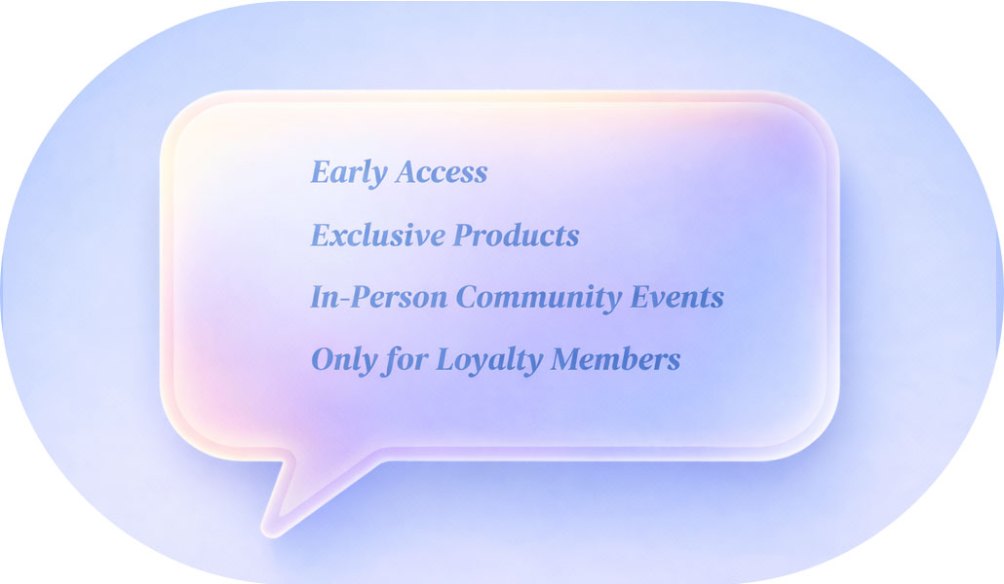
“Our customers are seeing success with experiential offerings, like exclusive shopping events, early product access or community-building activities, such as local business crawls,” said Reyes. “These create value that can’t be easily replicated digitally and tap into consumers’ desire for in-person connection.”
Another strong model is using verified data to provide differentiated benefits to specific audiences. So, students, educators or health-care workers receive offers tailored to their actual needs and lifecycle moments, such as back-to-school savings or holidays that celebrate their profession. The key is that verification enables brands to make truly irresistible experiences because they know it’s reaching the intended audience and not being broadly exploited.
For example, Ulta Beauty integrated student verification into its rewards program, enabling a more direct relationship with student guests and engagement beyond a simple online discount.
As part of its back-to-school campaign, Ulta brought the brand to life through immersive activations such as the “College Glow Up Tour,” supported by email and social to keep students engaged year-round. The program has generated strong organic traction on platforms like TikTok, reflecting authentic excitement from students and turning many into natural brand ambassadors.
Lifecycle marketing is a powerful strategy that transforms brand relationships with consumers. As consumers shop, they want more than just the products they purchase; they want a relationship with the brands and retailers with which they engage.
Research shows automated lifecycle marketing has improved open rates by over 83%, click rates by over 341% and conversion rates by over 2,270%.
Because modern lifecycle marketing is about evolving with consumers — and ensuring messaging and offers evolve with them — it isn’t simply a marketing function. It works best as a company-wide initiative, with loyalty programs helping brands better understand customers and adapt engagement over time.
“Loyalty programs are the perfect way for marketers to get trustworthy data to fuel a consumer’s lifelong journey with brands,” Compton said. “We’ve been in a place where acquisition marketers do acquisition marketing, loyalty marketers do loyalty marketing, et cetera. If we instead think about everyone in the company supporting a customer’s full lifecycle, we can use our loyalty programs to gather the customer data teams need to meet their collective goals.”
Loyalty programs help prove who a consumer is. For example, when they confirm that a member is an educator, providing an educator discount becomes a way for the team to add that insight to the customer’s profile and then use it to personalize every exchange moving forward.
This then sets up the marketing team for a clearer outreach plan. If the team knows a consumer is an educator, they can tailor messaging to follow that person’s year: sign them up during back-to-school, send useful tips during the term and check in during summer break when they are preparing their classrooms. Brands and advertisers can also use this to bring educators in store when the aisles are fully stocked — before parents scramble to make last-minute purchases.
This ensures communication feels fresh and relevant. It also makes outreach more efficient and the in-store experience ideal. When creating a message for an educator, it’s both highly personalized to that customer and broadly applicable to millions of other educators in that audience.
Any new strategy, or one that is company-wide, can be tough to get buy-in for, let alone implement. The primary hurdle in launching an identity-driven initiative is the perceived tension between short-term performance and long-term infrastructure. Organizations often feel forced into a false choice: drive immediate conversions through one-off offers or invest in the foundational data required for a sustainable lifecycle. When a strategy is viewed as a series of transient tactics rather than a scalable architecture, buy-in stalls. To move past the no, the narrative must shift from a point-in-time campaign to a measure-twice, cut-once business framework.
Securing internal alignment requires moving beyond department-specific metrics to the language of scalable and sustainable growth. This means framing identity as a global, activated asset that protects the brand against market volatility and data privacy shifts, rather than a marketing cost.
When verified audience data is positioned as a universal layer that supports everything from product launches and regional expansions to AI-driven predictive modeling, the ask isn’t just about budget; it’s offering a blueprint for a more durable, data-independent organization.
Reyes offers some suggestions that brands and retailers can use if this is an area of concern.
To get started, brands and retailers can get executives on board by running an audit that compares the data collected against what’s actually used. When leadership sees the waste, they’ll want to move faster. Define who owns the customer. If every department claims it owns the complete view, then nobody actually does. A leader needs to step in and decide which team is responsible for that data across the company.
“Change the view on loyalty,” Reyes said. “Move the conversation away from loyalty as a side project. Show how these programs bring in the information every other department needs. Instead of asking to change everything at once, pick one group of customers and show how better data handling leads to a clear win. If you look at the top players, the most profitable companies in any field already do this. Use their success to show skeptical bosses that this is the standard.”
Some brands are using this information to shift the selling season, offering early access to high-value customers when the floors are better staffed and inventory is high. Others are using customer data to identify desirable new products.
The most successful shifts involve breaking down the wall between loyalty as a standalone program and loyalty as a data layer that informs the customer journey. This means moving loyalty data into the central customer data platform so acquisition, retention, loyalty and relevant teams all have access.
Start by treating consumer verification as the entry point to a relationship, not just a one-time discount.
“These brands use community affiliation, verified through tools like SheerID, to segment their entire lifecycle strategy,” said Compton. “Verifying that a customer is an educator triggers a conversion when they redeem their offer, but it also enables every subsequent touchpoint to reflect that aspect of their identity. This turns a loyalty program into an opportunity to gather permissioned data, which customers will happily share to receive richer experiences as their brand relationships grow.”
This underscores the value of audience-specific offers, such as those for educators and students, as they feel earned rather than generic. These often outperform generic promotions and help brands stand out, drive conversions and protect margins by avoiding over-discounting. Brands using verified offers often see 30%–50% higher repeat rates.
Personal offers tied to who a shopper is, and not just what they’re looking to buy, create a deeper emotional connection that inspires action.
Reyes and Compton have seen consumers respond well to the following types of experiences:
- Early access to offerings (i.e., first look, early entry, limited inventory)
- Personal or community recognition (offers that reflect who they are, celebrate a milestone or show appreciation for their group)
- Low-friction verification processes (instant approval without having to jump through hoops or read fine print)
- Transparency that builds trust (asking for data in exchange for clearly defined value)
A full technology overhaul isn’t needed to get started or to begin seeing the benefits of using permissioned data throughout lifecycle marketing. Teams really just need three components: a platform for customer data, a way to send automatic emails and a tool to verify who people are.
While there are multiple verification methods, on-site is the most reliable — and it can be implemented in multiple ways. Depending on requirements, brands and retailers can utilize a hosted solution, embedded widget or full API integration for their verification tool. Each comes with customization options to ensure the CX is seamlessly integrated within the company’s own site.
“The process is designed to be straightforward because we recognize marketing teams are resource-constrained,” said Compton. “Rapid activation allows brands to move from implementation to a live campaign in just a few days. We provide verification rules, fraud monitoring and ongoing optimization support. The platform also integrates with major e-commerce platforms, marketing automation tools and CRM/CDPs, so verified identity data flows into your existing systems.”
If teams are looking for specific benchmarks before investing in any new technology, they can focus on acquisition cost efficiency, retention/churn rates and competitive pressure. If acquisition costs are rising but lifetime value isn’t keeping up, it’s a sign the company needs better targeting and lifecycle engagement. If churn is high in the first 90 days or it’s a struggle to reactivate dormant customers, better lifecycle workflows are needed.
“On the competitive side, look at what category leaders are doing,” said Reyes. “If major players in your space are investing in verified audience programs or sophisticated lifecycle marketing, that’s a leading indicator that the economics work. Also, examine your current promotional strategy. If you’re discounting broadly and seeing declining margins without corresponding loyalty gains, that’s a sign you could use verification to enable more targeted, higher-value offers.”

Data becomes a strategic asset when it’s not just collected, but activated — when every decision, from product design to inventory allocation, is rooted in insight, not instinct. It’s why permissioned data — verified data gathered from loyalty programs — should be shared across the entire business to inform marketing strategies and financial decisions, such as how products are designed, where stores are opened and more.
About SheerID
SheerID is the leading global provider for permission-based verification and engaging high-value audiences. Its award-winning Audience Data Platform is trusted by the world’s most admired brands, including T-Mobile, Perplexity, and LL Bean. SheerID offers the only secure, enterprise-grade platform that connects brands with the right customers, limits offer abuse, and powers personalized marketing, driving loyalty and revenue. For more information, visit SheerID.com and follow on LinkedIn.