


Target CEO says ‘busy families’ will be company’s focus as it seeks growth
One of the key messages from Target as it looks to turn around its sales slump under new CEO Michael Fiddelke is that it has sharpened its focus.
At its annual meeting with investors on Tuesday in Minneapolis, executives at the company constantly emphasized the changes it is making to appeal to “busy families.” With that renewed focus, the company is making tweaks to departments like food and baby, as well as services like same-day delivery, to cater to this critical demographic.
Fiddelke said at the investor meeting that it sees outsized strength and loyalty with busy families, and that they power the company’s growth. Target has long talked about families, frequently saying during earnings calls that it “helps all families discover the joy of everyday life.” But the company has adopted more specific language as to what kind of families it serves and what those families need out of the retailer. This subtle shift indicates an increased emphasis on making sure families can find what they need and get it quickly.
“These guests are united by mindset. They value style and design, and seek ease and simplicity, and they don’t want to settle for anything that feels ordinary or joyless,” Fiddelke said. “They move fast, they’re digitally fluent, and they gravitate toward brands that mix practicality with fun and personal expression.”
The CEO added that when Target serves busy families well, it creates “durable, long-term value” that has a positive ripple effect for all of its guests. The foundation of the company’s turnaround will be “a clear purpose and ambition rooted in joy and delight, clear choices that differentiate us and play to our strengths, and a deeper understanding of what busy families need and expect from us,” Fiddelke said.
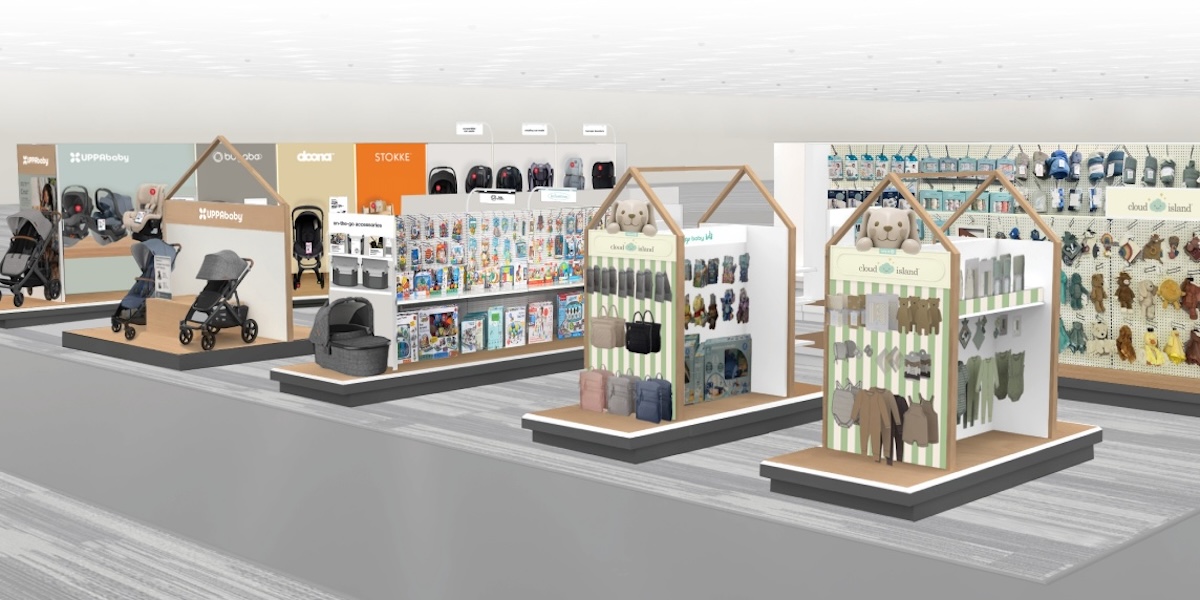
Cara Sylvester, Target’s evp and chief merchandising officer, said the most important categories for these families include baby and grocery. In baby, the company plans to launch an expanded assortment within its Cloud Island private label and is rolling out a premium baby boutique featuring brands like UPPAbaby, Bugaboo, Doona and Stokke.
“This is such an important life stage, and one of the clearest ways we build long-term relationships with busy families,” Sylvester said. “When a family welcomes a new child, where they choose to shop matters.”
Sylvester said families pick Target not just for the products, but also for the store experience. She said families come to the stores because they are clean, bright, friendly, safe and comfortable enough for bringing a baby into the store. Baby “is a category that’s gone untouched for years, and there is so much potential in front of us,” she said. “So in 2026, we’re elevating our baby experience with deliberate investment.”
That new investment in baby includes the company testing a concierge service in stores with specialists who can provide parents with expert support. It also includes new spaces in stores and online showing off baby products, as well as about 2,000 new items.
“All of this is about earning trust early and strengthening relationships that extend well beyond the baby aisle and beyond the baby life stage,” Sylvester said.
Target is also allocating more space to food and beverage in its new stores and remodels, and increasing the amount of new items in its assortment by 50%.
“Food and beverage is one of our most important categories and a powerful trip-driver for busy families,” Sylvester said. “We’ve built this business for how families shop today. It’s curated, it’s digital-first, and it’s fast. We invested early in same-day services, and our digital grocery capabilities are deeply integrated in order pick-up, drive-up and same-day delivery.”
Sylvester said the Target Circle 360 loyalty program, a paid subscription that offers free delivery and other perks, reinforces the convenience busy families rely on. Same-day delivery was up more than 30% last year, and membership revenue doubled.
“What we’re doing today is all about refining and scaling the flywheel to unlock even greater impact, because when product, stores, digital and loyalty operate as one system, we create durable relationships with busy families,” Sylvester said.
She added that 2026 will be a year of focused change for Target with disciplined choices about how it will compete and win.
“We know who we are; we’re a style-led, design-led and forward retailer that delivers value for busy families,” Sylvester said. “When we operate with clarity, sharp assortment decisions, higher standards in our stores, a distinctive food proposition, clear authority in style-led categories and an integrated digital loyalty experience, that’s our distinct lane.”
This comes as competitors like Walmart and Amazon have made strides in convenience, style and the guest experience, by expanding fast delivery services and making merchandising moves that attract high-income customers who once may have shopped at Target.
Retail analysts and investors have been encouraged by the company’s promises of change and admission that it could be serving busy families better.
“I like the fact that they say ‘busy,’ because that shows they have to add value. They have to make their life easier,” said retail analyst Bruce Winder, who has previously held senior management roles at Canadian Tire, Sears Canada and Zellers. “They have to find a way through technology. … They’re going to use their 2,000 stores, the loyalty program and the products they offer to make life easier for these busy families.”
Winder said he believes the company lost trust with these families in that it tried to cater to the masses, struggled to keep inventory available in stores and lost its drive in store operations.
“There were a lot of complaints about store issues, store execution and inventory availability,” Winder said. “They lost that trust to deliver the right product at the right price, the right value and the right style, and to deliver design in a very nice shopping environment where you know it will be in stock.”
Neil Saunders, managing director and retail analyst at GlobalData Retail, said it’s the first time he has heard Target executives so explicitly define their customer base.
“They’ve always served that market; I don’t think they’ve served them as well as they should, which is their admission,” Saunders said. ” But it’s interesting that they are calling out that particular segment as one they really want to court. It makes sense. It’s a very high-spending demographic. It’s a very high-penetration demographic across all the different categories.”
Saunders said this customer segment is especially sensitive to many of Target’s struggles right now, from long lines at self-checkout lanes to perceptions that the company may not have the best prices or value.
“The lack of convenience and the out-of-stocks hit much harder for this demographic,” Saunders said. “If you’re towing kids around a store, and the store is a mess, and it’s dense and really difficult to shop, it’s an absolute nightmare. So, it’s an identification that, actually, if you get it right with this group, you can probably win with a lot of other groups, as well, because this group is very demanding and it has very particular expectations.”