


Inside the gas and pizza chain sweeping small-town America
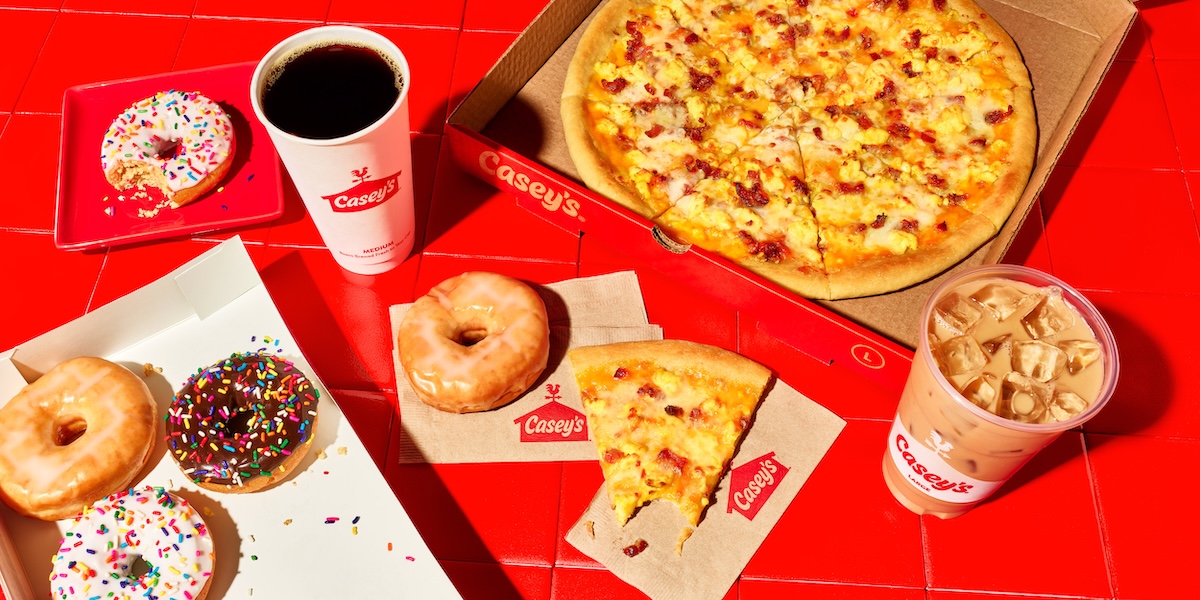
Depending on who you talk to, Casey’s is either one of the largest C-store and gas station chains in America, or one of the largest pizza chains.
The Iowa-based chain has about 2,900 stores in 19 states, selling gas and grocery items, as well as pizza, donuts and sandwiches — but the pizza is really what sets it apart from the crowd. News outlets have described it as having a “cult-like following” and being a staple of Midwest culture, especially in its home state of Iowa and surrounding areas.
Now, Casey’s is in the midst of another growth spurt. Excluding fuel, the company made $1.6 billion in sales in its last reported quarter that ended in October, a 13% increase from a year before. In 2024, the company acquired CEFCO Convenience Stores and owner Fikes Wholesale Inc. for close to $1 billion, giving it 198 additional stores in Texas, Alabama, Florida and Mississippi, as well as a dealer network, fuel terminal and commissary.
The company expects to open 80 new stores by the end of this fiscal year, April 30. It will have added more than 500 stores over the past three years, making it the third-largest operator of C-stores in the nation, according to convenience and fuel industry organization NACS. Casey’s also claims to be the fifth largest pizza chain in the country, with its location count sitting between Marco’s Pizza (1,200-plus) and Papa John’s (5,000-plus).
The chain’s identity is centered largely around its pizza, which it has been making in stores for 40 years, Casey’s chief merchandising officer Tom Brennan told Modern Retail. He said the idea came from a franchisee in the early ’80s who started heating frozen pizzas in stores. The company then started rolling out pizza chain-wide, but making it from scratch and using the same types of ovens used by Domino’s or Papa John’s.
Casey’s has been beefing up its pizza program over the past decade by adding a mobile app, rewards and delivery. Its rewards program now has 10 million members.
Last year, the company said its food business helped drive double-digit sales growth in its non-fuel sales, according to C-Store Dive. Per the outlet, president and CEO Darren Rebelez said interest in prepared foods stretches across all income levels.
“Pizza is central to our culture, and it’s really about delivering quality,” Brennan said. “For people who are not from the Midwest and aren’t familiar with the brand, initially when they hear ‘gas station pizza,’ they’re like, ‘Well, that doesn’t sound so great.’ But actually, we’re a restaurant that also happens to sell gas.”
Casey’s has other prepared-food offerings and began rolling out a sauced wings program last year at over 200 stores. It now has a plan to scale that across the chain over the next two years, according to Brennan.
Another key aspect of the Casey’s brand is that it focuses largely on small towns. Two-thirds of Casey’s stores are in towns of 20,000 people or less, and almost half of them are in towns of 5,000 people or less, according to Brennan. He said the company plans to continue to target similar areas within a 500-mile radius of each of its distribution centers in Iowa, Indiana and Missouri.
“Self-distribution is a huge competitive advantage for us, just because it allows us to control our own destiny in terms of our speed-to-market, our flexibility, our agility to keep stores in stock and just the benefit we get by negotiating with brands that would typically come through a wholesaler,” Brennan said. “That would be the biggest reason why we look to grow in our existing footprint, because we want to stay within our existing distribution radius.”
The Iowa-based chain started in Boone, Iowa in 1968 and has since expanded to small towns across Iowa and then other states.
“It really grew by moving from small town to small town,” Brennan said. “In so doing so, it built a connectedness with the communities it served.”
Brennan especially sees potential in Texas, which it entered via the CEFCO acquisition.
“There’s a lot of what we call ‘Casey’s country,’ in terms of those smaller towns outside of Dallas, Houston, Austin and San Antonio,” he said. “There are a lot of small towns in Texas and a lot of places where we feel very confident that Casey’s can win.”
The chain’s small-town focus produces a sense of loyalty and emotional connection among those who grew up with the food and the stores, said Wei Zhang, associate professor of marketing in the Ivy College of Business at Iowa State University. For many who live in small towns, Casey’s may be not only a gas station or C-store, but also one of the few places they can go to shop.
Zhang said the chain’s strong focus around pizza differentiates it from competitors like Casey’s, Maverik (formerly known as Kum & Go), Kwik Trip and QuikTrip. The pizza, he said, brings people in to buy other products like gas or grocery items.
“If you grow up with Casey’s pizza, and if you move away from your hometown, there’s always that strong nostalgic feeling every time you go that makes you feel comfortable,” Zhang said. “They understand exactly who their customers are, and their product positioning is exactly targeting those customers.”
One example of how the company leans into its Midwestern customer base: In 2022, it launched an “Ultimate Beer Cheese Breakfast Pizza,” with a Busch Light beer cheese sauce.
“If you know anything about the Midwest, you know that Busch Light is just a mega-brand up here, in terms of how much people love it,” Brennan said. “The ability to tie that into our pizza offering and work with a brand that is so resonant with so many of our guests, was a really fun endeavor.“