


Frida Baby faces backlash over the use of sexual innuendos in marketing
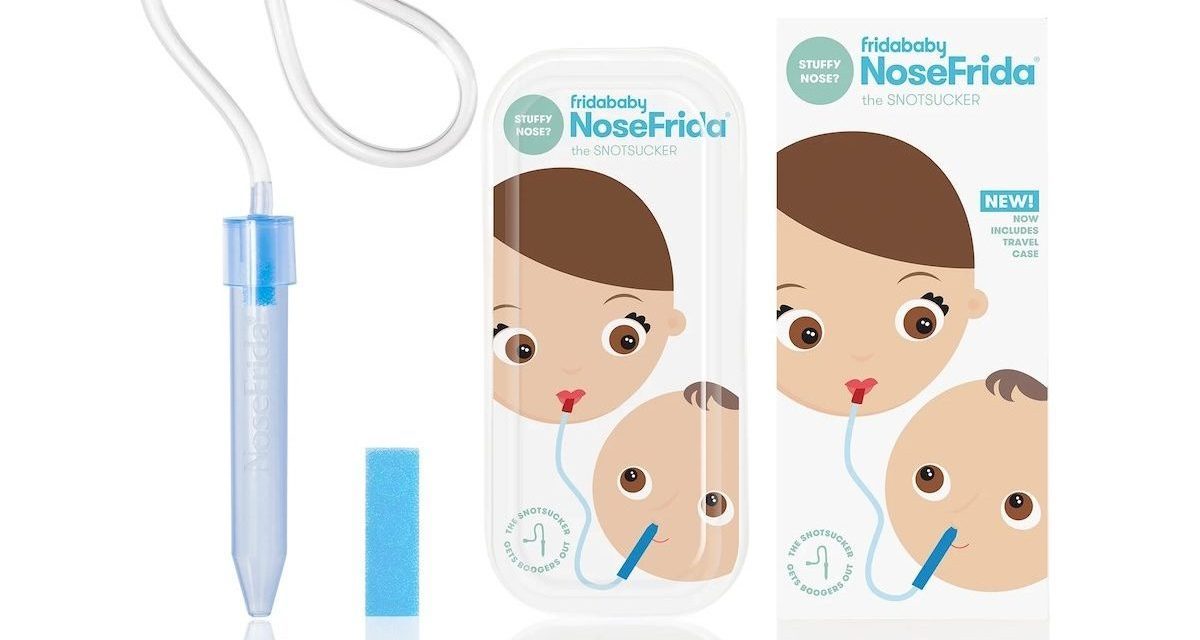
Consumers are calling to boycott the baby products brand Frida Baby over its use of sexual innuendos in some of its packaging inserts and marketing.
The backlash began this week, after social media users on X, TikTok, Facebook and Reddit dug up instances of Frida Baby using sexually suggestive language in packaging and ads tied to products for infants. As one example, the side of the box for Frida’s 3-in-1 thermometer asks, “How about a quickie?” Meanwhile, in a Facebook post about its 3-in-1 thermometer, Frida wrote, “This is the closest your husband’s gonna get to a threesome.”
In social media captions and comments, some users are calling the brand’s approach “absolutely vile” and “beyond disturbing.” “Sexual jokes to market baby products is actually sick and twisted,” an X user wrote. “I will be boycotting this brand, and every single parent should do the same,” another X user chimed in. Meanwhile, a Change.org petition to “hold Frida Baby accountable” has more than 1,500 verified signatures. Frida Baby has limited comments on its most recent Instagram posts amid the backlash.
Some consumers say they think the controversy is overblown. “This was most likely poorly thought-up advertising copy trying to make sleep-deprived new parents laugh,” someone wrote on Reddit. “These products have been branded as such for yearssss,” another Redditor said. Still, the controversy has ignited questions about how “edgy” a baby brand can be, considering its target audience is families.
In an emailed statement to Modern Retail, a Frida spokesperson said, “From the very beginning, Frida has used humor to talk about the real, raw, and messy parts of parenting that too often go unspoken. We do this because parenting can be isolating and overwhelming, and sometimes a moment of levity is what makes a hard experience feel human, shared, and survivable.”
The spokesperson went on to say, “Our products are designed for babies, but our voice has always been written for the adults caring for them. Our intention has consistently been to make awkward and difficult experiences feel lighter, more honest, and less isolating for parents. We’re never trying to offend, push boundaries for shock value, or make anyone uncomfortable.”
Modern Retail could not independently verify all of the images users posted on social media, but it did find the slogan, “How about a quickie?” on the Target product page for a Frida Baby thermometer. Likewise, the video about the “threesome” is “no longer available” on Facebook, as of Feb. 13, but it does show up in Google Search results.
Andy Barr, who works in PR and crisis communications, told Modern Retail that he was “totally blown away” by the posts about Frida Baby’s packaging. “That completely stopped me in my tracks,” he said. Barr, who has a toddler and three teenagers, found “this marketing to be in really poor taste.”
The brands’ slogans, Barr said, are funny on their own, but feel “completely out of kilter with being a kids’ product range.” Edgy humor in marketing, he said, could work to shake up traditional industries, “like cereal or rice or pasta, and maybe soft furnishings or furniture, but not baby products. … In the baby industry, [it] feels wrong.”
Frida Baby has long taken a more untraditional approach to marketing. In April, it posted on Instagram, “Take your top off,” to tease a new product. Last summer, Frida Baby also rolled out a special-edition breast milk ice cream, saying it was “available in all cup sizes.” In early 2025, Frida Baby put up billboards covered in actual snot to promote the effectiveness of its nasal aspirators.
Chelsea Hirschhorn, the CEO of Frida, has spoken publicly about the brand’s approach to marketing and merchandising. “Our mission is to prepare parents for those everyday unfilterable realities — with this shared humor and levity about it all that is rooted in our own personal experiences,” she told VoyageMia, a local Miami magazine, in 2018. “Fridababy is like the best friend no parent has,” she added. “We are parents with the tools for problems [people] didn’t even know existed.”
Frida Baby — which has also used language like “Lube it up” and “Parenting gives sucking a whooooole new meaning” in Instagram posts — has two sister lines: Frida Mom and Frida Fertility. Frida Baby has been endorsed by sites including What To Expect and Babylist. Frida launched in 2014 as a company focused on baby products, like the gas reliever Windi.
Kate Hartley, a crisis communications specialist, believes that Frida is “usually great at slightly cheeky content that has a serious point.” She mentioned its current “Show us what your boobs can do” campaign — which takes on the stigma of breastfeeding in public — as a “great example of getting the line right.” For the campaign, Frida Baby and Frida Mom brought a breast-themed float to New Orleans ahead of Mardi Gras. The side of the float says, “Boobs deserve better than beads.”
“You have to be incredibly careful as a brand — particularly when you’re selling products relating to children — not to overstep the mark,” she told Modern Retail in an email. “Anything that goes near sexual innuendo should be off limits, whatever the intent.”
Anjali Bal, associate professor of marketing at Babson College, said one of the problems with a line like, “How about a quickie?” is that it’s tied to a brand that parents trust. “There are many situations where a mom can make a joke to another mom, and it’s totally fine,” she told Modern Retail. “It’s a different thing if it’s being made by a company, on packaging that’s going out to the world. And because part of their brand is an image of a baby, it makes it really kind of icky.”
It’s still possible to do marketing with double entendres, Bal said. She mentioned an IKEA ad from years ago with a picture of a nightstand and a play on a “one-night stand.” “I laughed at it, but if my daughter read it, she’d have no idea what that cultural relevance meant,” Bal said. In the case of IKEA, that ad was less of a problem, Bal said, because “it’s not like there was a picture of a baby on the nightstand.”
Frida Baby has yet to respond publicly to the backlash on its social media or website, although its “Meet the team” page is now offline. Earlier on Feb. 12, a user on social media had pointed out that the page was up, and that it listed its director of packaging as a man. (A version from January lives here, on the Wayback Machine.)
When monitoring public reactions on Frida Baby’s posts, Hartley believes that some comments on X and Instagram “look as though they are bots amplifying the outrage.” Still, she believes that Frida Baby has taken “too long” to address the backlash. “I hope that in the background, Frida Baby is working out how its core audience is feeling right now and listening to them,” Hartley said. Even so, she said, “The real test of this backlash will be in sales figures.”
Bal of Babson College said that how and when a brand decides to respond to a controversy is “the million-dollar question.” “In some ways, the moment they respond, the conversation actually expands.” But Bal’s research also shows that “saying nothing is actually consumers’ least favorite response,” she added.
“What I will say is, if this ends up sparking and moving forward, the potential negative hit to the brand is huge,” Bal said.