


‘Product is king’: Mephisto U.S.A.’s new CEO readies the brand for its next chapter
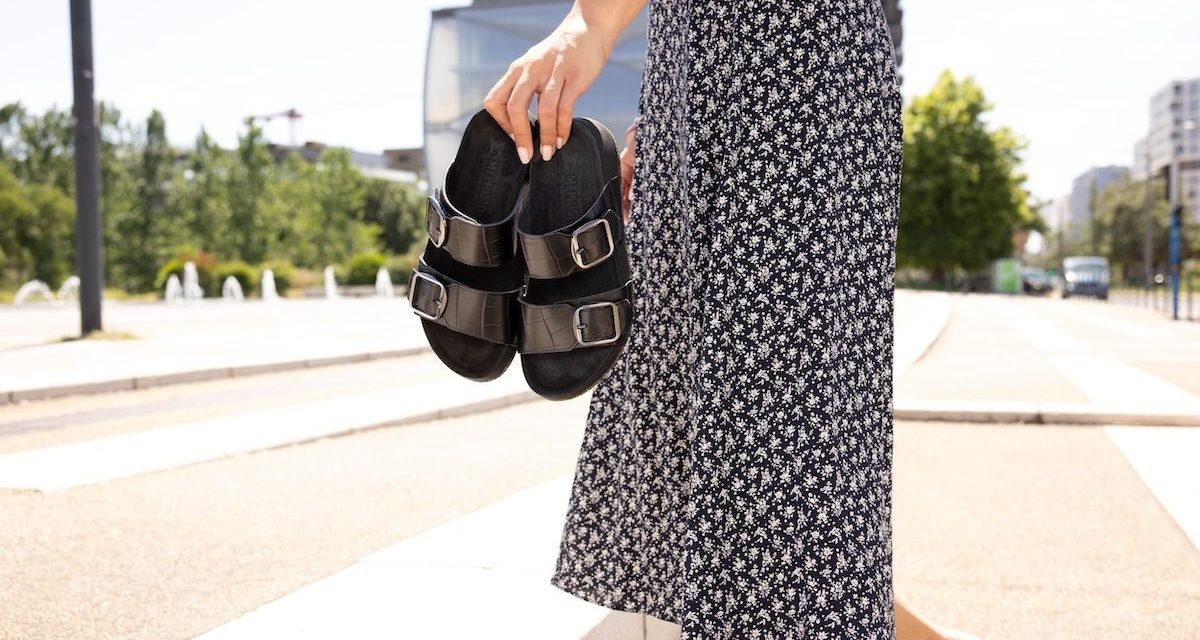
Mephisto, a premium footwear brand based in France, started the year with a major change at its growing U.S. business.
Effective in February, the brand — now in its 61st year — appointed Logan Bird, the company’s vp of omnichannel sales, as its next U.S. CEO and president. Longtime CEO Rusty Hall retired after six years in the role and 50 years working in the footwear industry. Prior to coming to Mephisto, Bird held senior roles at Lands’ End — where he was head of strategic partnerships and head of Japan — and Zappos.
Bird’s promotion comes at a major time of growth for Mephisto’s business across the Atlantic. Mephisto has factories in France and Portugal but sells products in more than 80 countries, and it generates some 80% of its sales from exports, per its website. Its U.S. business saw more than 50% growth in its customer file last year, fueled by demand for women’s sandals and “Iconics” silhouettes like Match, Rainbow and Helen. Sales of Mephisto’s women’s premium sandals over $250 are up more than 15% year over year, the company told Modern Retail.
Mephisto launched in 1965 under the Michaeli family, who still own the brand today. Its first product was a moccasin, although Mephisto has branched out into sneakers, slip-ons, boots, lace-ups and hiking shoes. Among footwear fans, Mephisto is known for its cushioning, its premium materials like leather and its handcrafted construction. The company sells shoes for around $200-$400 on its website, as well as in department stores, flagship stores and concept stores.
Modern Retail spoke with Bird about his vision for Mephisto U.S.A. and how he plans to keep pace with today’s fast-moving consumer. The below interview has been edited for length and clarity.
You previously oversaw omnichannel retail at Mephisto U.S.A. How are you going to use that experience in your new job, as CEO?
“I think it becomes an extension of that. The foundation we previously laid is something we can continually build upon, … so that when you see Mephisto, you know it’s Mephisto. You recognize the brand and the products, and as we communicate with you, that messaging carries across the different platforms today.
We often talk about how retail has transformed over the last decade and a half. [For years] the way that you would interact with the consumer was at retail [stores]. Now, largely before they get to retail, they’ve already made a decision [via their phone]. … So, you have to think differently about what that omni experience looks like. How do you control that? How do you convey that? And how do you bring the customer along in that process, so you’re not left behind? The brands that do that well today are the ones that are really succeeding.”
What has Mephisto done, in that regard, to make that experience more seamless?
“One of the big projects that I led with my team was bringing back the e-commerce experience to the U.S.A. Historically, that was managed out of our business in Europe. The goal we had was to make that more centric to the U.S. business by rebuilding a website here. … Our French team and business is fantastic, and they do a great job supporting us, but there are nuances between each area of the world. To make [our business] more personalized … becomes very pivotal. That’s one of the things that we’ve done a really great job with, … so the experience you see online [in the U.S.] starts to mirror the experience you see when you visit a Mephisto shop or a partner store or a retailer like a Dillard’s or a Nordstrom.”
As Mephisto is based in Europe, what has your experience been like, when dealing with tariffs?
“The tariff situation was a fascinating experience to go through. It was a lot of: You didn’t know what to expect. You didn’t know how the consumer was going to respond to raising some retail prices, and what that meant for your own cost structure as a business. There’s some difficulty and nuances with that.
We’ve been pleasantly surprised with the resiliency of the American consumer and how they look at the brand and understand the value they’re paying for. … We did do [price raises] on a style-by-style basis. You try to be very particular about looking at the impact and trying to control some of the psychology around what that looks like for the end consumer. … At our higher price points, there’s always a little bit of concern about: Will the product adoption be hurt or hindered by that? We try to look at [the matter] on an individual product level, to make sure it’s a blended cost that still gets us to where we need to be to maintain a healthy and strong business, … but that we’re not putting the customer too far out of being able to buy the products they like.
We absorbed some of those costs [from tariffs], as well. Being in all these different countries enables us to find opportunities across the board, from technology to production to streamlining logistics, … and focus on ways that we can compound small savings here and there for ourselves, as well as for the consumer. … And I think [the tariff situation] changed a little bit of our mindset [in that] your [ability] to respond is one of the benefits of having your own factories. I communicate directly with our factories about the products we want to make — but giving them longer lead times to batch more products together enables them to be more consistent and buy better when they’re sourcing materials. From a planning and production standpoint, that’s a big deal.”
What are some of your goals for the organization in 2026?
“[I am] really focused on disciplined growth. We’re very specific about how we want to thoughtfully expand our brand, protect our premium positioning and find the right type of scale that really works. My focus the last couple of years has been that omnichannel experience, and that’s still going to be a major part of our growth. … We also have proven hero SKUs that have driven innovation in this industry that we’re going to continue to double down on.
[We are] bringing those products front and center to focus on how we advertise and drive sales around those products and innovate along those same type of products. … We’ve been in this business now for 60 years, and product is king. Product is ultimately what drives the consumer to us and brings them back.”
You’ve spoken about appealing to customers via different retail channels. Do you find that shopping behavior differs at each one?
“The idea that people have started to use online shopping as ‘wardrobe try-on’ is still a major part of what you see. People [are] buying multiple pairs to bring home to try on, and they send back the handful that they don’t want to keep. I think that still continues to be a really relevant part of how we service the customer, and it becomes a way to make sure you’re answering the question of, ‘Do I know sizing? Do I know how to give the correct type of recommendations?’
It’s really about analyzing that customer journey, because you want to make sure that the customer is happy at the end of the day. … You’re also monitoring what future transactions look like. You know what the best cohort of customers does. That 1% of customers that purchases with you five to 10 times a year, that’s the one that … you want to learn the most about, to bring in more customers like that. [They] become brand stewards for you. They love the brand, and they love the product. Those are the people you want to find a way to amplify.”