


Bouqs launches $5M crowdfunding raise to support future store openings
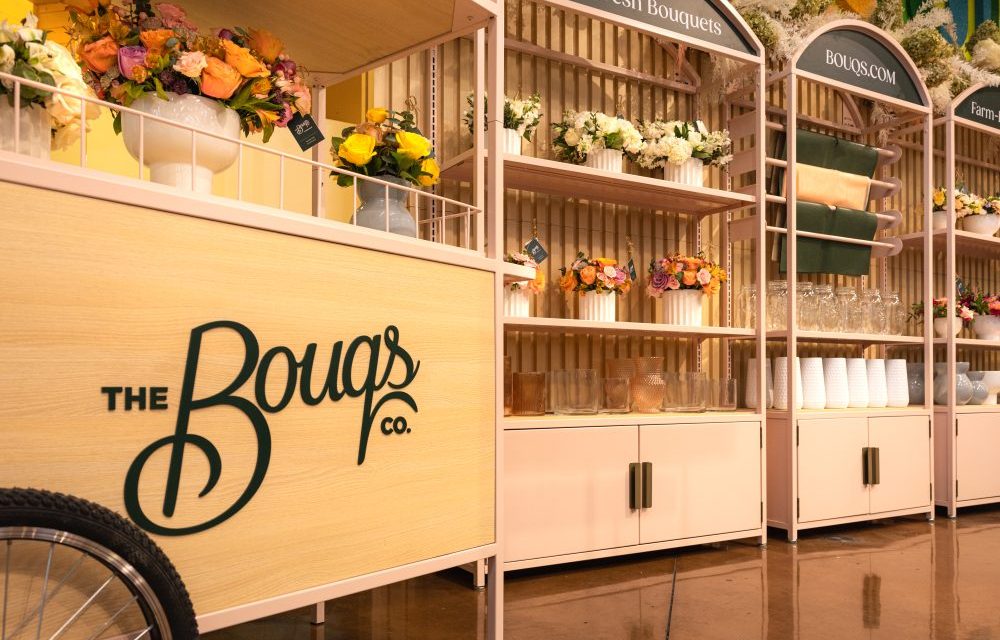
Floral delivery company Bouqs has launched a crowdfunding raise seeking up to $5 million to help support future brick-and-mortar expansion.
The offering, which went live in mid-January on the DealMaker platform, requires a minimum investment of $500 at $2 a share. The investment documents show the company made over $90.3 million in sales in its last fiscal year and around $91 million the year before that.
John Tabis, co-founder of Bouqs, told Modern Retail the goal is to help fund the company’s next brick-and-mortar expansion. The company has inked a deal with a national retailer for 65 in-person locations, though details on where and what those will look like are still confidential. Tabis also said the company is exploring opportunities to acquire local flower shops from business owners who may be retiring, and to power popular local brands with the Bouqs supply chain and logistics operations.
“We’re hoping to get to 70 stores in the next couple of years, and hopefully, well beyond that,” he said. “We see an opportunity here to really be the first nationwide chain of floral shops serving customers with the same sustainable high-quality blooms we’ve done direct to consumer.”
The fundraise is the latest move from the 13-year-old company that has been angling to position itself as more than just an e-commerce operation. In June 2024, it also launched a small network of Whole Foods shop-in-shops in Southern California to bolster sales and same-day delivery.
Beyond the company’s own operations, the campaign points to how companies are getting creative about raising money in a lean fundraising environment. Beverage brand Brēz, for instance, in September decided to raise money through a special purpose vehicle, or SVP, that allows investors to pool their income. Startup brands also continue to tap online platforms like Kickstarter and Indiegogo.
Mike Duda, an investor in CPG companies and managing partner at Bullish Inc., said crowdfunding has become more popular as the number of public companies has dwindled to almost half as many as there were in the 1990s.
“It makes access to private companies easier to invest in, when it used to be walled off to the wealthy,” Duda said. “They’re making it so a dentist in Syracuse, New York can invest in a startup.”
DealMaker, the platform Bouqs is using for the fundraise, dubs itself “the future of retail capital.” It has raised over $2 billion for companies including vacation rental service Pacaso, medical device startup Monogram and rotary engine company Liquid Piston. Per an SEC filing from Bouqs, DealMaker receives an 8.5% cash commission based on the amount of securities sold before the deal closes in January 2027. It also charges a $47,500 advance setup fee and a $15,000 monthly fee.
Sometimes, crowdfunding campaigns can be a sign that companies aren’t able to tap capital from more typical sources or are struggling to stay afloat, Duda said. But materials associated with the offering say Bouqs is an EBITDA-positive company and reported a net loss of about $5 million last fiscal year, down $6.5 million from the year before. Physical sales are proving to help grow e-commerce sales, and the company reports year-over-year delivery growth of 33-135% in counties with stores.
Duda said it could be as much of a marketing play as a financial one. “It seems very trial-oriented,” he said.
Tabis said Bouqs first considered a crowdfunding offering several years ago. The market didn’t seem mature enough, so the team set the idea aside. But a variety of online investment and market platforms have become more popular since then, and Tabis said that gave the company confidence that the category could be leveraged the right way.
Down the road, he said, the company may also consider a Regulation A, which is a way to offer securities with fewer requirements than an IPO.
“I think it’s a very valid path for exploring funding for any type of business nowadays,” he said.
But this campaign is a departure — both in method and overall financial goal — from how the company has raised money in the past.
Bouqs last raised $23 million in a Series D in July 2024 from CrowdOut Capital, while its 2017 Series C, led by Partech Ventures, had investments from groups like NextEquity Partners, Reimagines Ventures and Azure Capital Partners, as well as Shark Tank investor Robert Herjavec.
Beyond posting the investment opportunity on its website, Bouqs is spreading the word through paid ads on Meta platforms. Launching the fundraise right before Valentine’s Day, a busy time for floral delivery services, also gives the campaign more visibility.
Investors receive perks based on investment size: Those who put in $2,500 or more receive 5% more bonus shares and five $50 gift cards. Those who invest $25,000 or more receive 15% bonus shares, $500 worth of gift cards, a merch bundle and invites to future events.
Tabis said the crowdfunding offering becomes a novel complement that not only brings capital but also helps connect Bouqs to its most loyal fans — who, in turn, help introduce others to the company.
“What I love about this is that you’re effectively raising capital while bringing in a new base of not just consumers, but also advocates for the brand,” Tabis said. “As an investor in any company, whether it’s public or private, you become a super fan. Their success is your success, as well.”