


What it takes for startups to pull off a Costco launch
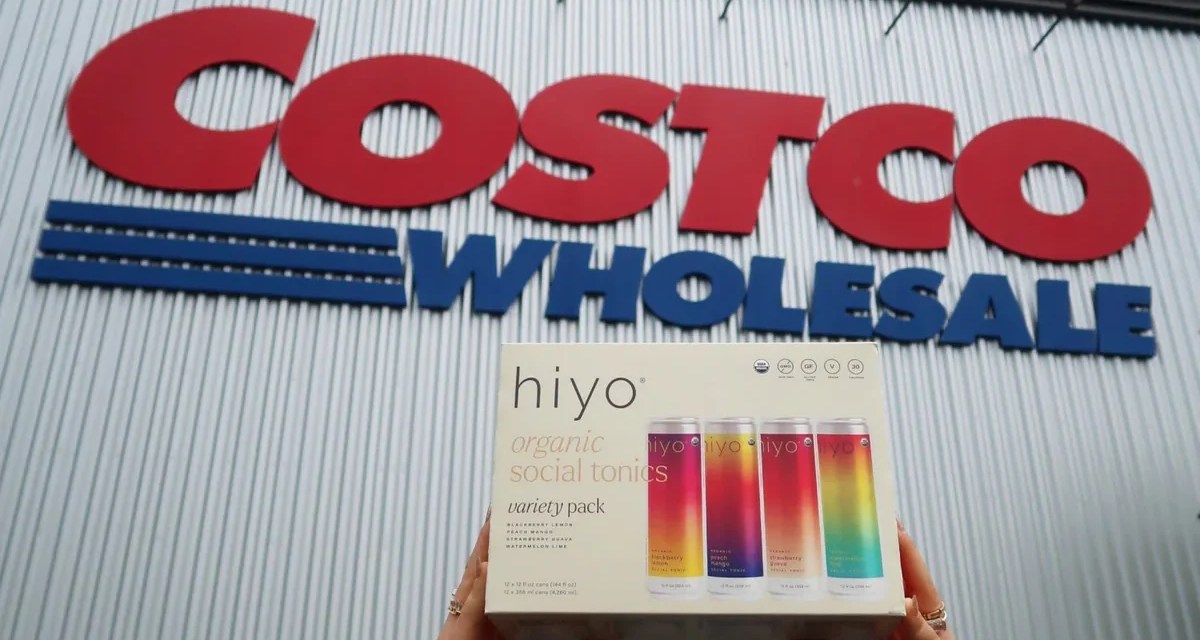
After a successful regional test in Southern California, beverage brand Hiyo had about six weeks to prepare to launch in 400 Costco stores in 47 states this January. George Youmans, co-founder and Chief Revenue Officer at Hiyo, said it was an “absolute sprint” to get it done.
“It’s something that every brand anywhere wants to hear,” Youmans said. “And then you almost collapse because you’re so nervous. It’s such a big opportunity, but you’re also like, ‘How the hell are we gonna pull this off?’”
But thanks to some overtime hours and a willing co-packer, Hiyo successfully created an exclusive 18-can variety pack with its best-selling flavors and ordered enough to get over 1,000 pallets ready. Youmans said that, while it is early days, the company is already seeing some awareness lift from having a presence in such a well-known retailer.
“If you’re going into all national Costcos, that’s billions of potential impressions,” Youmans said. “It legitimizes and gives awareness to your brand. For a lot of brands, it can be that parabolic moment where you get into Costco and it actually supports your velocities in other retailers, as well.”
It’s no secret why brands like Hiyo are eager to land in Costco these days. While startups may have once viewed Target as a kingmaker, Costco’s increased membership and foot traffic are making it a much-desired channel.
But showing up in Costco is high-stakes, and it takes much more than simply making a club-sized version. Some companies have to make new custom packages to meet the price-pack architecture of a club store. Others have to design new messaging that stands out in a stack of boxes on a pallet.
And then, there’s figuring out how to hit concrete sales goals in a short amount of time. Youmans said one of the biggest differentiators between Costco and other retailers is that its buyers give direct expectations for dollars per SKU, per door, per week.
“I appreciated that as a brand owner, that I know exactly what my goalpost is,” he said. “And I think that that’s something that’s really cool with Costco as a specific retailer.”
Why brands are putting Costco on their vision boards
As Youmans said, the sheer volume of customers and growth at Costco has made it an attractive place to land. The latest earnings results showed net sales of $65.98 billion, a year-over-year increase of 8.2%. And Costco said it is seeing double-digit growth in categories like jewelry, special events, and health and beauty.
Some of that growth may be traced to how Costco shoppers expect to see new brands at every trip. Gary Millerchip, executive vp and CFO, said on the December earnings call that the company’s merchandising goal is to deliver on value, quality and newness to drive membership growth and the frequency of visits.
“When we talk about what members are looking for, they’re looking for value and for quality and for newness. And I think our buyers and operators have done a great job of bringing that to our members,” Millerchip said.
Beyond the opportunity to reach its members-only shoppers, another reason new brands like Costco is because they have more opportunities to get onto the shelf. Ryan Lupberger, CEO at the eco-friendly cleaning products company Clean Cult, said brands can enter to sell for just eight or 10 weeks,for instance, rather than making a longer-term commitment. This creates more opportunities to get on-shelf, compared to how retailers like Target or Walmart stick to annual or semi-annual resets.
“It’s the fastest to scale,” he said. “And it’s the right retailer to work with if you do everything right.”
Getting the right look and feel for Costo shoppers
Clean Cult first started working with Costco.com to sell laundry sheets, toilet cleaner, laundry soap and dish soap. The digital-first approach helped them forge relationships with Costco buyers that led to a 300-store launch in April of an exclusive, 20-ounce refillable bottle of its all-purpose cleaner. That meant buying new dip tubes and new bottle artwork, and creating a new process to make and pack the product.
But once it started selling in stores, Clean Cult also had to figure out how to make the boxes of product look good on pallets, something unique to the warehouse setup.
“With all the other retailers, you don’t put your product in something else. There is no outer case, so that has to be completely defined,” he said. “There’s a lot [involved] when it comes to building these products, and it’s not something you deal with in another retailer, because nothing is stacked like that.”
While big boxes like Target and Walmart have end caps or in-shelf signage to help new brands stand out, Costco’s bare-bones warehouse feel means brands have to consider how their boxes look stacked on pallets. Lupberger said the company did mock pallet tests and mock pack caps to see what would catch people’s eyes as they strolled by the product.
“When it sits in Costco, it will win or lose,” he said. “Eighty percent of what we focused on was pallet architecture with the right price. And I think it’s such a simple answer, but it’s where a lot of brands could fail if they don’t get it right.”
Making a splash for the big Costco debut
One of the newest entrants to the Costco ecosystem is vitamin company Ritual, which announced this week that it’s launching a two-pack of its prenatal vitamins in 200 West Coast Costco locations. The bundle retails for around $49, compared to $39 for one bottle on the brand’s website. Founder and CEO Katerina Schneider said the price point reflects the brand’s view of “luxury at a fair price.” But this offers extra value, compared to what a DTC customer gets, “because it is Costco,” she said.
“Costco has been on my vision board since day one, personally,” she said. “I buy a lot of stuff at Costco, I have three kids. And I think the cool thing there is not just the value, but also the alignment around quality.”
To help garner early success, the Ritual team is planning a massive social media push. One video features Schneider walking through the store in a bright yellow trench coat, as if she’s flashing customers; another has a team member carrying a giant membership card. Schneider said there’s also a giveaway planned. The Costco launch is also kicking off with extra in-store visibility. Ritual’s products will be on the end cap for two weeks before shifting to a rack in the vitamin section.
“We’re leaning into a lot of fun, organic social to play up the launch and make sure people are aware of what’s happening,” she said. “Specifically for supplements, Costco is such a big opportunity and can drive such a meaningful part of a brand’s revenue in the category, and it’s a really big financial opportunity for us.”
Youmans from Hiyo said his company knew it was time to commit to a nationwide launch at Costco because the brand had strong enough success in its other retail doors like Sprouts, Target, H-E-B and Wegmans. This helped the company get data on who its customer is and where they shop, which helped it feel confident Hiyo could play at the club level.
“We never wanted to get over our skis, because I think that a lot of brands can be attracted to the shiny object of growing their distribution faster than their demand really warrants,” he said. “We try to always test the waters first and feel really confident about it.”