


How apparel brands aim to win the spotlight at the Winter Olympics
Apparel and footwear brands are skating into the spotlight at this year’s Winter Olympics and Paralympics in Italy — and they’re determined to nab a win in one of the world’s leading fashion hubs.
As the clock ticks down to Milan-Cortina 2026, companies are putting out products for athletes and consumers alike. EA7 Emporio Armani, Ralph Lauren and Lululemon are designing uniforms for Team Italy, Team U.S.A. and Team Canada, respectively. Salomon is providing jackets and boots for 18,000 volunteers at the Olympics and Paralympics. Pajama brand Dagsmejan is partnering with the Swiss National Ice Hockey Team and providing athletes with sleepwear and eye masks. And, earlier in January, J.Crew and Skims each revealed apparel lifestyle collections — the former, with U.S. Ski & Snowboard, and the latter, with Team U.S.A.
The Winter Olympics and Paralympics will take place from Feb. 6-22 in Milan and Cortina d’Ampezzo. Compared to the Summer Olympics, the Winter Olympics are typically smaller, largely due to high infrastructure costs and climate restraints. Around 2,900 athletes will compete in 2026, compared to 10,500 athletes in 2024. But the merchandise and marketing opportunities for brands are still massive, considering the buzz around sports, the billions of viewers and the allure of a “Big Four” city like Milan. In fact, partnerships tend to lead to sales; Anta reported a rise in revenue when sponsoring the 2022 Winter Olympics in Beijing. This year, NBC said ad slots for the Winter Olympics sold out with “unprecedented demand,” luring more than 100 new advertisers.
“The Olympics are, hands down, one of the most powerful sports platforms in the world,” Harry Poole, svp at the marketing agency Excel Sports Management, told Modern Retail. Poole started his career representing Olympic athletes before shifting to the marketing side. “When you think about global connectivity and cultural relevance, [the Olympics] is a movement that inspires generations,” Poole said. “And the market for it this year is fantastic, when you think about Milan and fashion and what that means to the world.”
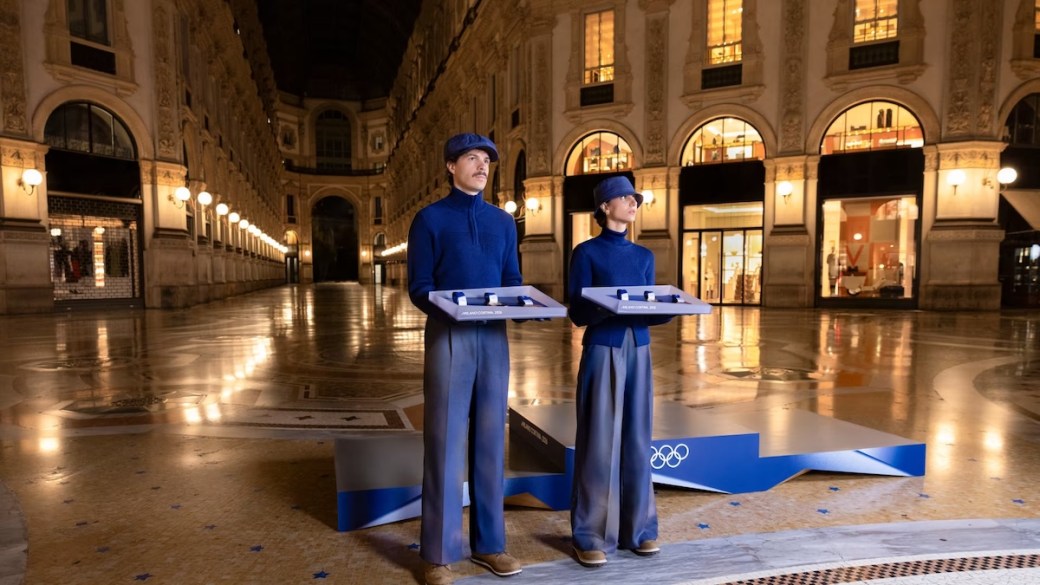
Milan is known for its luxury houses like Prada, its ready-to-wear styles and its quality craftsmanship, especially around leather goods. The city is also home to Milan Fashion Week, as well as the fashion district Quadrilatero della Moda. Aesthetics and design, then, play a major role in this year’s Olympics and Paralympics. For instance, this year’s official victory ceremony uniforms stemmed from a contest among three fashion design schools. The new torch design sports a sleek, minimalist look and a larger flame. Even the official motto of the Games is “IT’s your vibe.”
Fashion players, for their part, have spent months hyping up their Olympics products and partnerships. Per a December press release, Ralph Lauren’s Opening Ceremony uniform for Team U.S.A. includes a “statement winter-white wool coat,” while its Closing Ceremony uniform “draws inspiration from vintage ski racing kits.” “We look forward to … bringing our heritage of sport and style to life at the Milano Cortina Winter Olympics,” Patrice Louvet, president of Ralph Lauren, said on an earnings call in November. The company’s nine-part TikTok series around the collection and its athletes has garnered more than a quarter of a million views.
Meanwhile, Lululemon’s uniforms for Canada feature topographic map prints and maple leaf designs. The brand recently posted an Instagram video captioned, “We’re not just from Canada, we’re cut from the cold.” “All of us at Lululemon are incredibly proud to support Team Canada on the world’s largest sporting stage with product designed for athletes, and with athletes,” CEO Calvin McDonald said in a statement.
Functional fabrications
For all the hype around fashion at the Olympics, brands are still prioritizing fit, fabric and functionality. After all, wearing an eye-catching uniform at the Olympics and Paralympics is one thing. It’s another to ensure the products are optimized for performance.
Nike, which sponsors the podium for Team U.S.A., will debut its Therma-FIT Air Milano jacket at the Winter Olympics. It has called the jacket “the brand’s most technically engineered garment of its kind.” The jacket allows athletes to regulate their temperature by inflating or deflating air within compartments. “Every detail was engineered to let athletes tune their own comfort and fit,” Amie Achtymichuk, lead apparel development innovator, said in a statement.
Apparel brands are creating distinct technology for non-athletes, too, as the healthcare apparel brand Figs demonstrates. 2026 is the first Winter Olympics that Figs, known for its scrubs, will outfit members of the U.S. medical team, or the medical professionals assisting the athletes. “Our goal is really to give them a podium of their own,” Figs CEO and co-founder Trina Spear told Modern Retail.
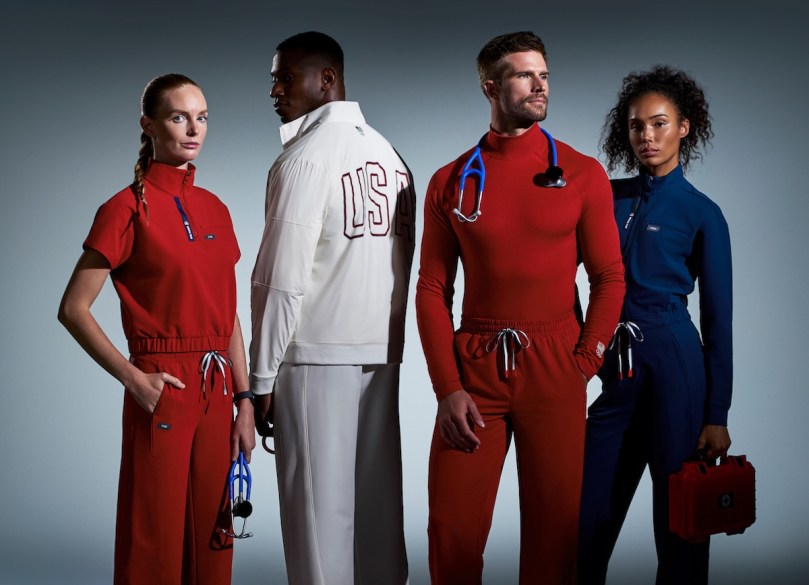
Figs first outfitted the U.S. medical team in 2024 at the Summer Olympics in Paris. It will do so again in 2028 at the Summer Olympics in Los Angeles. But Figs had to make changes this year when it came to developing scrubs, jackets and other gear. It ended up developing a new fabrication, known as FIBREx, that’s optimized for alpine conditions like colder temperatures and wind.
“We’re really leveling up from what we did in Paris,” Spear said. “In Paris, we were mainly inside, in sporting facilities, … [but] for winter, we’re on a ski mountain. We designed and developed really warm and technical products that are also really comfortable. … You need a product that’s going to support you in a 12-hour shift or [allow you to] support an athlete across many hours.”
Meanwhile, Dagsmejan, a sleepwear company, is giving members of the Swiss National Ice Hockey Team pajamas and sleep masks to wear at night. For athletes, proper recovery, especially during sleep, is “as much a part of training as nutrition,” said Dagsmejan CEO Catarina Dahlin. Dahlin developed Dagsmejan with her husband, in consultation with partners like the Swiss Federal Laboratories for Materials Science and Technology. The company says its sleepwear uses breathable, natural fibers and focuses on temperature regulation.
As Dahlin sees it, Dagsmejan’s fabrications are perfect for helping ice hockey players wind down after a stressful day. “The matches often take place quite late, [under] very bright light and [with] high energy,” Dahlin told Modern Retail. “After that, you have to try to unwind and go to bed. But you’re also in a bed you’re not used to, and you may not be able to control the air conditioning. How well you recover really impacts how well you can perform and react when it matters.” Dagsmejan has supported the Swiss National Ice Hockey Team since 2021, and both have posted about the partnership on social media.
A lifestyle play
Not all fashion companies involved with the Olympics are developing technical fabrics for those on the ground in Italy. Companies can activate around the events in multiple ways, including through licensing agreements for gear like hats and sweatshirts. These items allow fans of teams and events to show their spirit — and they help boost sales for brands, too.
Some fashion brands are focusing more on the consumer angle. Chubbies, which makes swim trunks and board shorts, rolled out a lifestyle collection for fans to wear at home. The line — which includes performance polos, hoodies and lined swim trunks — is part of a licensing agreement with Team U.S.A.
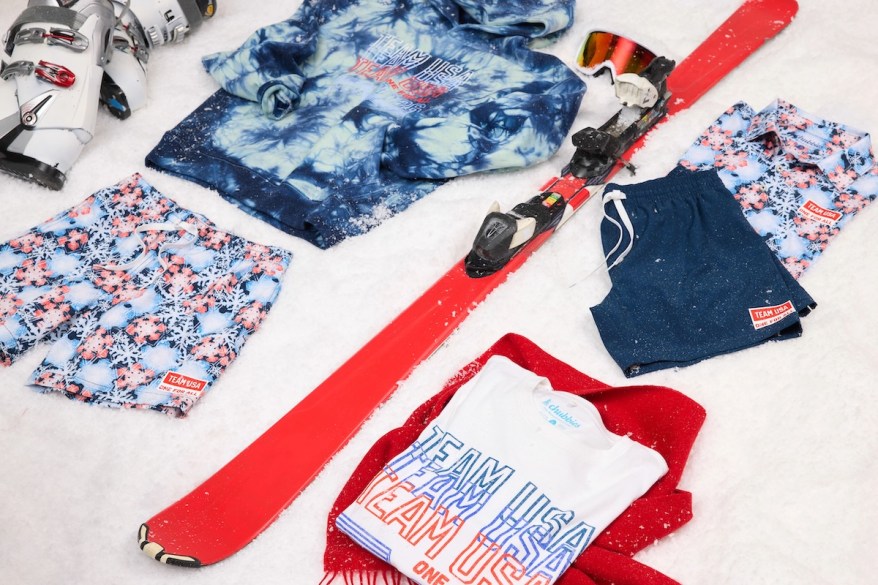
Team U.S.A. gave Chubbies design guidelines, but the brand could still present its point of view, Tyde Kaneshiro, senior product manager of special projects at Chubbies, told Modern Retail. Chubbies ended up developing a print modeled after intricate snowflake photography. “In a lot of our seasonal development, we look to the runway for trend and color inspiration,” said Kevin Dopp, Chubbies’s senior design director. “But, in this particular [case], we looked at art as inspiration.”
The final designs have red, white and blue to reflect the colors of Team U.S.A. “It doesn’t look generic and feels very us,” Kaneshiro said. The brand is pairing the pieces with a humorous marketing campaign. An Instagram video shows a model in a studio, pretending to ski, while getting “fake snow thrown at him” from a fan, said Ashley Spencer, director of marketing at Chubbies. “We’re championing the vibe of the Olympics in a Chubbies-spun way,” she added.
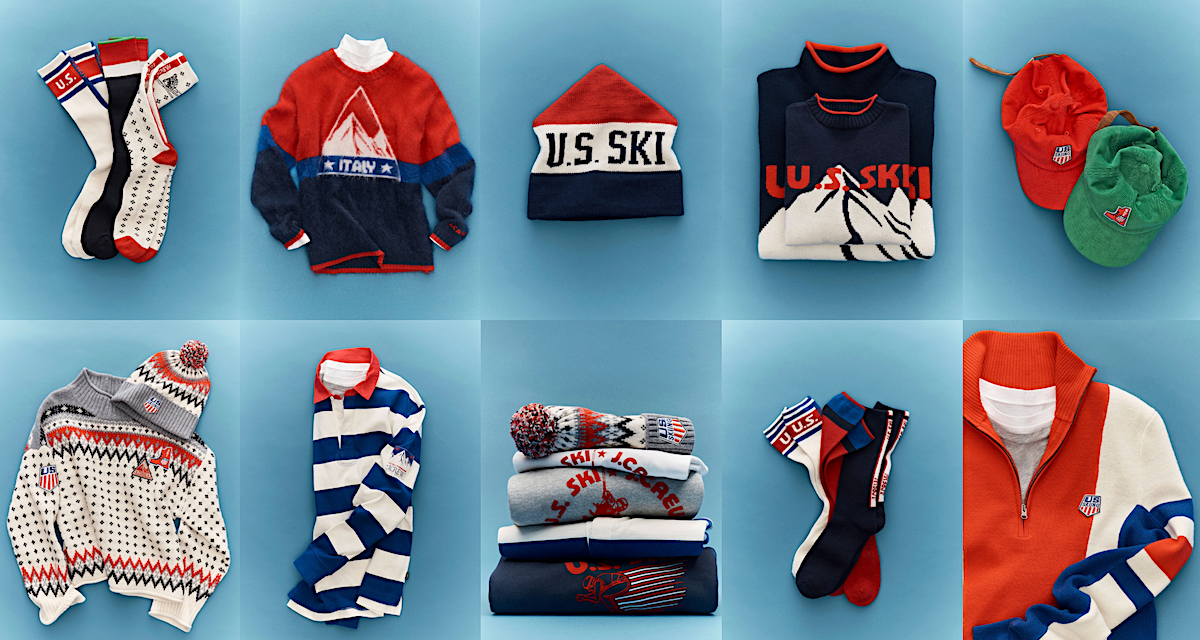
Also in January, J.Crew rolled out a lifestyle collection with U.S. Ski & Snowboard as part of a partnership that will last three years. The pieces include knitwear, shirts and accessories for women, men and kids. “Our inaugural collection underscores J.Crew’s ability to connect timeless American style with the cultural significance of sport on a global stage,” chairman Kevin Ulrich said in a statement. J.Crew’s marketing campaign around the collection features pro athletes throwing snowballs and relaxing on chaise lounges.
Meanwhile, Skims released the fourth iteration of its official Team U.S.A. capsule, complete with loungewear, sleepwear and intimates. Per Skims, the collection has “rest and recovery in mind” and features “graphics that take their cues from team uniforms.” “It’s comfortable, functional and captures the pride I feel in representing Team U.S.A.,” Olympian Madison Chock said in a statement.