


The Athlete’s Foot launches US e-commerce site in quest to build a more unified brand
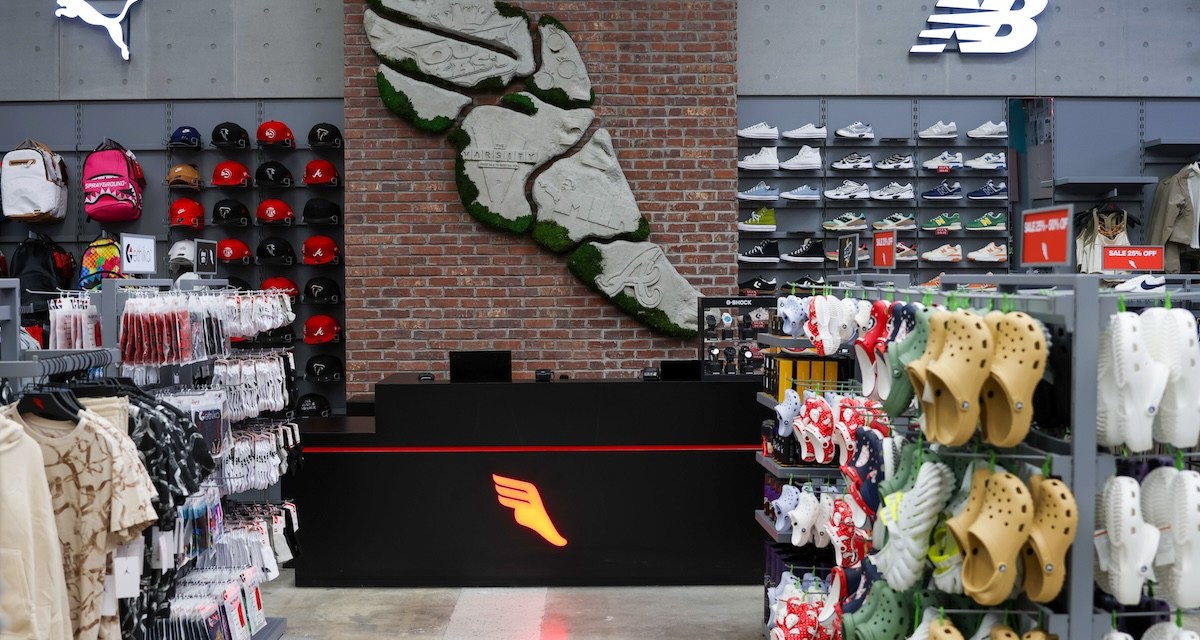
As the holiday season comes to a close, most retailers have been focused on driving as many sales as possible through their e-commerce sites. But The Athlete’s Foot has a different focus than most: It has spent this December soft-launching its U.S. e-commerce site.
The retailer actually discontinued its U.S. e-commerce site around six or seven years ago, according to its global CEO, Matt Lafone, because it wasn’t profitable. The Athlete’s Foot, founded in 1971, has a storied history in the footwear space, with Lafone arguing that, “We kind of invented the original sneaker boutique concept.” But it also illustrates how complex retail businesses can become over time.
The Athlete’s Foot, owned by global sports and lifestyle group Arklyz Group AG, now has about 450 stores worldwide across 20 countries, including some owned and operated by the company and others franchised. In the U.S., specifically, The Athlete’s Foot now has around 75 locations. Lafone, who has been an executive at The Athlete’s Foot for more than four years, took over as CEO in April and has been on a quest to modernize and simplify the business since then. And launching (or relaunching) its U.S. e-commerce site is an important part of that.
Lafone said that, while The Athlete’s Foot “eventually wants to make money” with its U.S. e-commerce business, the goal is more so to use it as a vehicle to “tell the brand story.” The Athlete’s Foot argues that its franchising model allows its store operators to build more direct relationships with their respective communities — a key differentiator compared to, say, larger national chains like Foot Locker. So, the e-commerce site includes a community section that will list upcoming events and activations at various The Athlete’s Foot locations.
Lafone said that, right now, the company is focused on working out different kinks with the website. The official launch of the e-commerce site will be tied to Black History Month in February, an important month for The Athlete’s Foot. “Ninety-five percent of our franchisees are minorities,” Lafone said. To promote the website launch, The Athlete’s Foot plans to invest in the basics: performance marketing, SEO and CRM. But a lot of the focus will also be on “offline user experiences,” Lafone said, name-checking scavenger hunts as one potential example, to emphasize that community feel.
That will ramp up as the World Cup approaches, which will be another big moment for The Athlete’s Foot. “Our goal is to … actually fly people around the world to be able to go to Atlanta or Dallas, to be a part of this and create content and experience this live.”
The Athlete’s Foot built its website in-house. The company also decided that it didn’t want one centralized distribution center to fulfill orders. “We wanted the ability to service our local customers,” Lafone said, so the company will be pushing services like buy-online, pick-up in-store.
Matt Powell, founder of the consultancy Spurwink River, said in an email that The Athlete’s Foot franchise model “lets the retailer react to local trends and build a local community.” However, he added, “The challenge for such a diversified model is to create one brand and product story for e-commerce.”
Unifying and simplifying the business has been a key focus for Lafone since becoming CEO roughly nine months ago. “Everybody was kind of running individual businesses, whether the direct businesses we own in Greece or the franchise business or the joint ventures,” he said.
As CEO, Lafone has built out a global e-commerce team. There’s also now a central content development team, whereas before, all the different lines of business were essentially creating their own content. And content, Lafone believes, is important to telling The Athlete’s Foot story, which is the overall goal of the e-commerce site.
“The last thing the world needs is another transactional website,” Lafone said. “We definitely want to do something very different — more culturally relevant and less transactional.”