


Wolverine Worldwide CEO talks growth in 2026, AI and getting ‘better at telling stories’
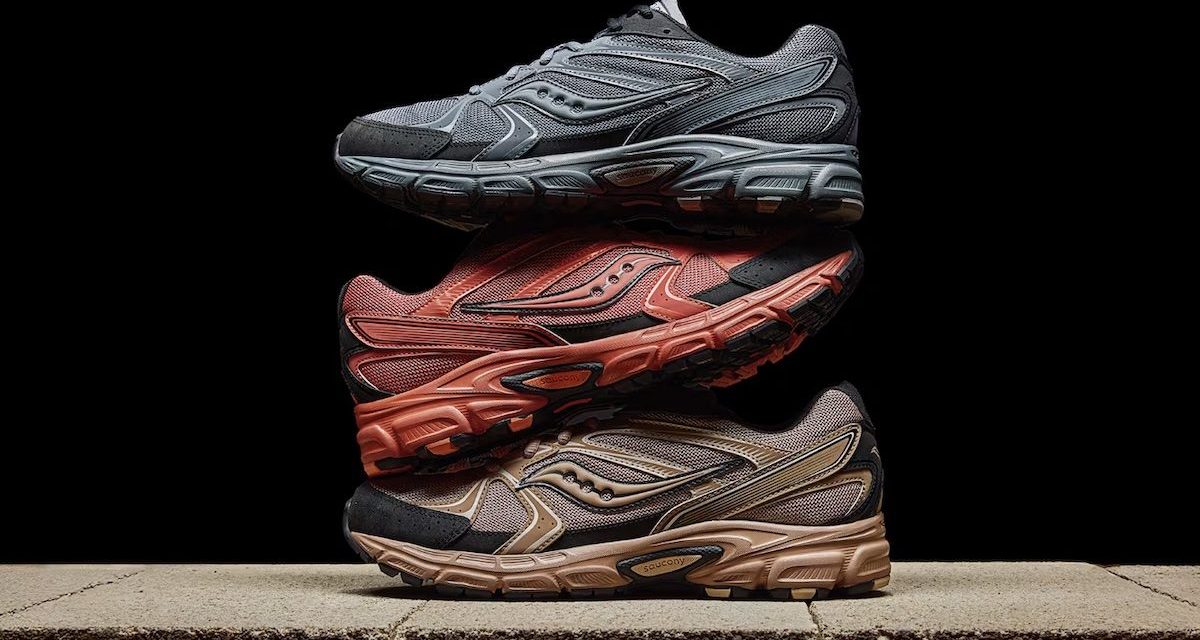
Chris Hufnagel, CEO of outdoors giant Wolverine Worldwide, believes the company has generally been very good at developing products. Wolverine Worldwide is the owner of brands known for high-performance products like Saucony and Merrell. But, he said, “I think we have to get better at telling stories.”
The company has had a hectic 2025, dealing with tariffs and larger economic uncertainty. Earlier this year, Wolverine announced it expected an estimated $30 million negative profit impact in 2025 from tariffs. At the same time, it’s been able to mitigate some of this by diversifying its supply chain, particularly when it comes to China. About six years ago, some 40% of Wolverine Worldwide’s products sold in the U.S. were made in China, Hufnagel previously said. That’s now in the high single digits, and the company aims for this to be near zero by 2026.
All the while, Wolverine Worldwide has pushed ahead with merchandise and distribution. It opened new international stores, developed products like the Saucony Endorphin Speed 5, sponsored run clubs and races, and used artificial intelligence to fine-tune its ads and analyze market data. Wolverine Worldwide is also preparing for the upcoming Winter Olympics with marketing campaigns, although it is not an official sponsor.
Wolverine Worldwide’s most recent earnings, which covered the third quarter ending Sept. 27, reflected 6.8% year-over-year revenue growth, coming after 11.5% year-over-year growth in the second quarter and 4.4% year-over-year growth in the first quarter. However, some of its brands are performing better than others. Merrell, for instance, was up 5.1% year over year in the third quarter, while Saucony was up 27%. On the other hand, Wolverine was down 8.2%, and Sweaty Betty was down 3.9%. One of Hufnagel’s goals for 2026 is to build market share for Sweaty Betty and the company’s work group.
Hufnagel, who became CEO in 2023 but has been with Wolverine Worldwide since 2008, spoke with Modern Retail about the company’s progress in 2025 and its plans for growth in 2026. This interview has been edited for length and clarity.
How have the holidays been going for your brands? What are you prioritizing at this time?
“It’s been a good holiday, certainly. Weather is an important piece for seasonal businesses, and we had a bit of cold weather earlier this month. For the brands that sell seasonal products, that was an encouragement.
[We’re] just paying attention to where the consumer is. There’s talk about this K-shaped economy and the bifurcation of low-income versus high-income [consumers], and what that means. I think the headline, to me, agnostic of the holiday season, is that the consumer has been remarkably resilient. Consumer sentiment has certainly not equaled consumer spending. The consumer still seems willing to spend here in the U.S. We’ll see where things shake out once the dust settles on 2025, and then we’ll be off to the races in 2026.”
Wolverine Worldwide posted better-than-expected quarterly results recently. What has been key in getting people to shop your brands?
“The majority of our portfolio is in footwear. The thing about footwear is that there’s a beautiful combination of want and need. There’s that satisfaction of a new pair of shoes and how it makes you feel. And a lot of our brands operate as need-based. … We have a lot of work brands, and from a boot perspective, over time, you just need new work boots. Merrell is a brand based in the outdoors, and the same goes for the outside — you need a new pair of hiking shoes.
Where our brands win, when we win, is when we bring new innovation to the marketplace. There are plenty of choices out there that aren’t disruptive, and I think that’s where brands generally struggle. When you innovate in our category, you win. If I look at our brands, where we’ve innovated, those styles are winning. Whether it’s the Endorphin series in Saucony, whether it’s the Moab Speed 2 or the Wrapt in Merrell, whether it’s the Infinity series in the Wolverine brand — [with] that innovation, new comfort technology, new performance technology, new materials and new colorations, those brands are well-positioned to succeed in any environment.”
I’d love to talk about marketing. How have you adapted your marketing strategy or marketing messages in the last year?
“If I look at the arc of Wolverine Worldwide, we generally have been a very good product company. I think we have to get better at telling stories. … We have to become a better marketing company, and I want our brands to participate in the cultural dialogue. How do we tell compelling stories that capture consumers’ imaginations? In a consumer’s life that is cluttered right now, [where] they’re fed so much information, how do we tell deep and meaningful stories?
I think Saucony is a good example of that. In the old days, you could sponsor an athlete or sponsor a race. Those things still work. But, at Saucony, we’re trying to get close to run clubs and local communities and embed ourselves in the fabric of the run culture in these cities. Another strategy we’ve taken this year is to over-invest time and effort and people in key cities. We’re a global organization. We sell our brands in 170 countries and territories around the world. At the same time, not all cities are created equally. So, what we’ve begun to do is distort our investments in key cities that have an outsized influence, both in size and scale, but then also regionally.
I think London’s a good example. It’s really the first city where we took this key city approach. We took all of our marketing dollars across Europe and disproportionately invested them in London and invested in that local running culture [and] in run clubs. We opened our first Saucony store in Covent Garden [in June]. We became the title sponsor for the London 10K [and the] title sponsor for the Shoreditch 10K. That distortion of investments has had an outsized effect in London and the greater metropolitan area, but also across all of Europe, because it’s such an influential city. I think it’s incumbent upon brands to stay very close to the consumer, to understand modern levers of demand creation, and then to work with speed and agility.”
Let’s say we are chatting 12 months from now. What’s on your list of things to achieve by the end of 2026?
“We’ve really seen strong growth out of Saucony and good growth out of Merrell over the past year. We want to build that healthy flywheel of sustainable growth. While we’re a public company and report every quarter, I also want to take a long-term view to build long-term, scalable businesses.
[For example,] Saucony operates in a really unique space. It has 120 years of history. It has performance, it has lifestyle, it has archive, and it operates in this juncture that I think is really unique. The potential of Saucony is really tremendous. At the same time, I want to do that [growth] responsibly. I want to grow door counts. I want to grow SKUs. I want to grow a business that ultimately drives sustainable growth, [that is] not just a couple-of-seasons wonder, but something that is meaningful and delivers value for our shareholders.
I think Merrell is the No. 1 hike brand in the world. It’s the biggest brand in our portfolio. How does Merrell transcend beyond the trail? How does Merrell become an outdoor lifestyle business, especially for her? Merrell skews more male than female, and for us, building an outdoor lifestyle brand that works for her will unlock a lot of growth.
Sweaty Betty is a brand in the portfolio that we acquired in 2021. We’ve worked to integrate that business [and] stabilize that business, but it’s competing in a very fierce space. [There’s] Lululemon, Alo, Vuori, Gymshark, Athleta. How does Sweaty Betty continue to tell its authentic story? It is one of the OG women’s athleisure brands. How does it regain its rebellious roots and its really strong voice, [and] at the same time, diversify beyond just the core leggings business and go into new categories?
And we’ve got a new leader of the work group, Justin Cupps, who joined us a month ago. We are the market share leader, but our brands have struggled there. They’ve been inconsistent for the past couple of years. Largely, I would say that those are issues that we own. I think those are some self-inflicted challenges. We didn’t bring enough innovation to [the] marketplace. We weren’t differentiated enough. We didn’t think about marketplace management as well as we should have.
So, [those are] the things I’m excited about — and there’s a lot to be excited about.”
Will AI play a role in any of those changes or progressions you mentioned?
“Yes. AI is something we talk about every single day. It’s moving at such a [fast] pace, it’s almost hard to keep track of. I think AI is an amazing opportunity for the organization. At the same time, it’s a very big threat if we don’t understand it and adopt it and use it responsibly. I think that having that foresight for what AI can mean [is important]. … I can’t predict the future, but I would maintain it’s probably the biggest disruptor that will happen in my lifetime in this business. I took my leadership team out to Microsoft to spend two days on AI. I’m pleased to say that we’re using it, and we’re finding pockets in the organization to make us faster, more nimble and more efficient today.
At the same time, where the world moves next is going to be critical as we work our way through its curve. … [Right now,] we’re using AI in marketing. … We’re using AI in our creative teams and the development of ads and marketing. We’re using AI to synthesize market data — what’s happened with the competition, what’s happening in the marketplace and how that informs the decisions that we make. There’s a long list that’s in flight today [and] a longer list of use cases we’re considering for the future.”
I wanted to finish our conversation on tariffs. You mentioned being a big player in the footwear industry. Obviously, that industry has been one of the ones hit the hardest by tariffs. Looking back on the past several months, how would you evaluate the ways in which you’ve responded to tariffs?
“For us, I’m really pleased with the way the organization responded to tariffs. I would say, at 4 o’clock on April 2, the world changed with the Liberation Day announcements, and we quickly mobilized the teams to react to that. I’m thankful that the good work we’ve done for the past couple of years, … and the way we’ve learned to operate, has allowed us to mobilize very fast in the face of tariffs.
Obviously, we’re still working our way through. For me, the headline is: There’s still some level of uncertainty in what happens with tariffs. We’ve got a lot of frameworks. We don’t really have a lot of trade agreements. There’s a Supreme Court case that had verbal hearings a month or so ago. We anticipate a Supreme Court ruling when they’re back in session in January.
I think, generally, what I would say is that, as business leaders, we just want a little more certainty. We can deal if we know how things are going to play out. … I really couldn’t be more thankful for how the team has rallied together and our actions in the face of tariffs. At the same time, I think we, along with a lot of people, are waiting to see where this actually ends. When we do have some definitive answers, in classic Wolverine fashion, we’ll go attack that for the best interests of the company, the best interests for our consumers and the best interests of our shareholders.”