


Why Rae Wellness relaunched after a 2-year hiatus
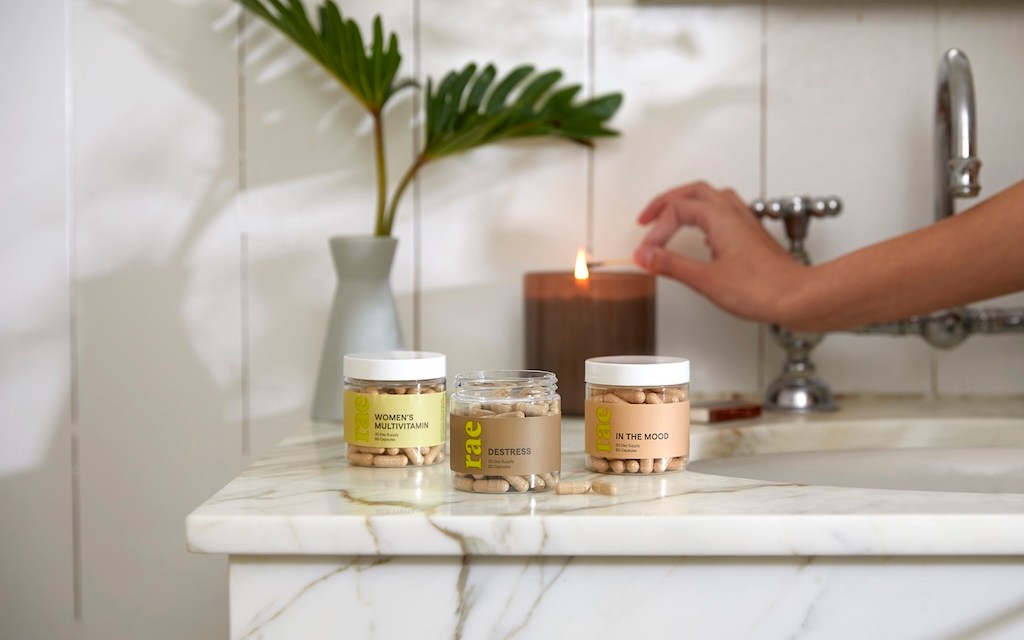
Rae Wellness, which launched in 2019 and made its way into thousands of retail doors in just a few years, is making a comeback due to popular demand after pausing operations in late 2023.
The Minnesota-based company was part of a wave of wellness brands that launched and grew quickly during the pandemic era. Rae launched at Target within a few months of its DTC debut, and eventually expanded to other retailers like Whole Foods and Walmart. But about two years ago, the company experienced a confluence of operational obstacles that forced founder Angie Tebbe to hit pause.
Now, the company is back after consistent requests from its existing customer base and has decided to rebuild starting with a presale on its own website. For the relaunch, Rae is bringing back eight of its bestselling women’s products, which include Pre + Probiotic Capsules and Multivitamin Capsules. The company plans to eventually get back to an omnichannel model, but Tebbe said she will do so gradually to maintain a sustainable growth trajectory.
Tebbe told Modern Retail she did not think the brand would be coming back in the current retail environment. “I honestly had let it go, but our customers brought it back,” Tebbe said. Soon after product availability began to dwindle, the company began receiving emails, equating to thousands of messages over the past two years, from customers asking why they can’t find Rae products anywhere.
“We saw people on TikTok interviewing store employees asking where [the Rae products] had gone. And the Rae website continued to receive traffic despite having no products in stock. “Reviews continued to be left on our broken website, where you could only leave reviews on one product,” she said.
Looking back, “The data had proven that we were on the right path: We had 4.5 million customers in three years and scaled sales every single year,” Tebbe said.
Eventually, Tebbe decided to bring the brand back after many discussions, largely because the captive audience had stuck around. “I personally dipped into my Target corporate 401K, and we decided to get the company [back] and restructure,” she said.
Tebbe pointed to two incidents that caused the 2023 pause. One was an execution error during a major retailer rollout. “That prevented the product from getting out of the back room onto the shelf,” she said. “And eventually, when the production began flowing through the register, we weren’t getting credit for those sales.”
That resulted in a domino effect of other issues, such as not getting replenishment orders rolling in post-launch. “We didn’t know what we were selling, and the store inventories were lumpy, to say the least,” she said. “It would have taken a massive over-investment to fix that.”
At the same time, Tebbe said another issue had been bubbling, with the company: “having a misalignment” with an investor’s growth goals. “Those two things happened at the exact same time and pushed us to ask a lot of questions about what to do,” she said.
Tebbe added that the decision to pause wasn’t a case of having a money-losing DTC-first business model — the company was built to support omnichannel from the start, she said. The company last raised $9.5 million in 2021. Tebbe said it had been operating with healthy margins until 2023. “Given my experience at retail, we had built the margins and the cost structure,” Tebbe said. However, she said the required over-investment following the prolonged disruptions would have made recovering losses too difficult.
“We’ve been given such a rare second chance — not just to return but to also be smarter, better equipped and more in control of our growth,” Tebbe said.
Having the break was also a natural reset for the operation. “We were able to take a year to first realize that this is something we should do, and then six months to focus on how we should approach it,” Tebbe said. Some of that strategizing included taking time to build out a more efficient supply chain. “We have multi-month rolling inventory secured and manufacturing backups,” Tebbe said.
This time around, Tebbe said she is also being more selective about which partners to take on, whether on the retail or marketing side. “Every single partner now shares our mission to prioritize women and make wellness accessible,” she said.
Manica Blain, an angel investor and founder of Top Knot Ventures, said startup brand revamps have been on the rise as their founders aim to structure and maintain relevancy.
“We’re in an era where brands move through relevance cycles much faster, and that’s forcing a rethink of what ‘success’ actually looks like,” Blain said. As such, some brands can have a meaningful moment, generate real value, and then need to either evolve or reset.
“Founder-led relaunches can work, but only when they’re grounded in real consumer demand, not nostalgia,” Blain said. If there is still an active community pulling the brand back into the market, she said, a reset can be rational. “If not, it’s usually a sign the market has moved on.”
Tebbe acknowledged there are indeed even more challenges in today’s retail and CPG landscape, like expensive advertising and tariffs. But there have also been innovations since. “A lot of the world has changed in two years. ChatGPT wasn’t even being leveraged by brands at the time,” Tebbe said.
Tebbe said she’s also not giving up on wholesale altogether, but will wait to announce retail partners at a later time. “I want to make clear that we do have the resources to invest for the long term,” Tebbe said. “But we’re not putting too much pressure on ourselves to grow before we’re ready.”