


Made In uses its cast iron launch to land in Williams-Sonoma
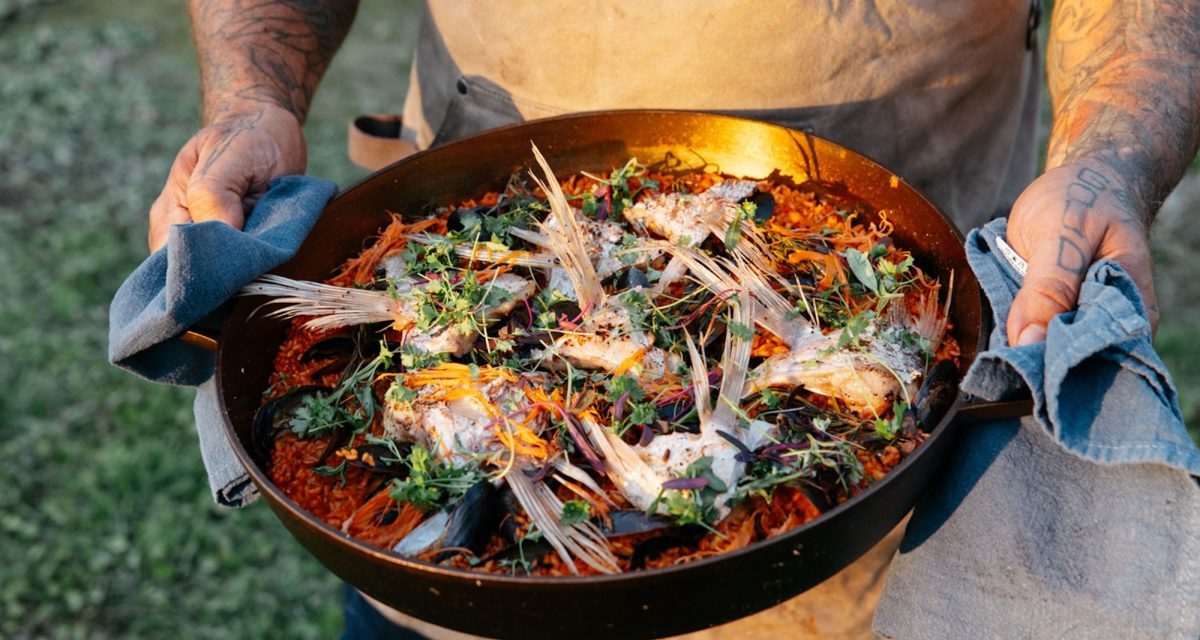
Made In is expanding into more categories and more retailers in its quest to build a global, premium cookware brand.
The company announced on Monday that it is launching a cast-iron collection and entering Williams-Sonoma. The retailer will carry the cast-iron collection exclusively, to start; it will then debut on Made In’s direct-to-consumer site around June 1, in time for Father’s Day. In addition to the cast-iron collection, Williams-Sonoma will also carry Made In’s American-made stainless steel collection.
The launch speaks to how Made In, founded in 2017, is looking to carve out its defensive moat within the cookware space. As consumers have grown more concerned about the use of PFAS, more startups say they are acquiring customers who start their search looking for non-toxic cookware.
But these customers are also increasingly experimenting with different materials — stainless steel, ceramic, cast iron — to figure out what they like best in a pot or pan. And they’re likely to switch between brands as they realize the limitations of different materials. Most ceramic pans, for example, can’t really be used on high heat, while stainless steel pans can be a bit more finicky.
A number of newer startups on the cookware market, like Caraway and Our Place, got their start selling ceramic cookware in a wide variety of colors. Hexclad, backed by celebrity chef Gordon Ramsey, has a patent for its pans, which combine both stainless steel and a non-stick surface.
Made In’s approach, meanwhile, is material-agnostic. It also isn’t tied to one single country of origin for its manufacturing — it manufactures some products in the U.S., some in Europe and some in Asia.
Rather, its marketing centers on what it calls “professional-grade cookware,” the idea being that its products are developed in partnership with trained chefs and are suitable for both home cooks and professionals. To that end, the company says more than 2,000 restaurants carry its products. The company said revenue grew 52% between 2024 and 2025, and it does most of its revenue in the fourth quarter.
“A lot of our competitors are very tied to a certain technology,” Made In co-founder and CEO Chip Malt said. “We’re actually speaking to just like the broad-based, passionate cook, who loves chefs and loves cooking, and their favorite thing to do on a weekend is try new recipes,” he added.
But getting into cast iron was a bit of a different ballgame for Made In. Cast-iron pans can last for decades and be passed down through generations, if maintained properly. Perhaps the most notable U.S. player in the space, Lodge, has been around since 1896.
It took years for Made In to develop its cast-iron line, Malt said. It focused on seemingly small design tweaks to solve some of the product’s biggest pain points, which people who already use cast-iron pans are likely familiar with. For example, Made In sought to make its cast-iron pan a bit lighter by grinding out a portion of the metal to reduce the weight on the sides.
“You’re removing weight from the areas that don’t matter, but keeping weight in the areas that do matter,” Malt said.
Malt also said that Made In had been in talks with Williams-Sonoma for years, but the company didn’t want to launch within Williams-Sonoma until it was “ready for wholesale” and felt it had something unique and differentiated to offer the retailer.
In addition to Williams-Sonoma, Made In also sells its products through select Crate & Barrel, Bloomingdale’s and Ace Hardware stores. Along with launching new products and entering new retailers, Malt said international expansion will also be a key growth lever for Made In this year; the brand plans to open a European fulfillment center by September.
But the cast-iron launch is the launch “we’re gonna put the most emphasis behind, from a brand perspective, for the year,” Malt said.