


How category creators like Willow and Oura ward off dupes and defend their leads
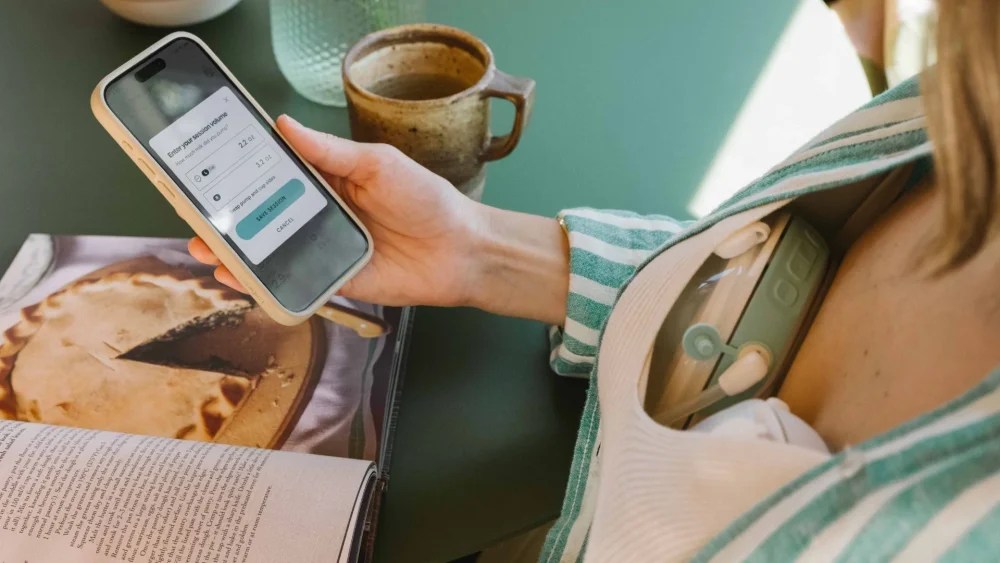
When the wearable breast pump company Willow was founded in 2014, pumping breast milk was a sit-down endeavor.
Most nursing moms tended to use an electronic pump connected to a large battery, a bulky and multi-part contraption that required the mom to sit down and stay put with cords dangling from her chest. But the Willow was a wearable pump that could be placed inside a bra, allowing moms to walk around while pumping hands-free.
“We had breast pumps that were not designed for the women who used them,” said Willow CEO Sarah O’Leary. “They were so inconvenient, and tied you down and all of that. Our core innovation of a pump designed around the person using it, that could go in your bra so you can move around while you pump, was an idea that turned a whole category on its head very fast.”
Over a decade later, the wearable breast pump is a common purchase for a mom-to-be, with models available from brands like Momcozy, Zomee and Spectra. Insurance marketplaces that sell breast pumps even have “wearable” as a product filter now.
O’Leary said Willow generally sees the competition as a sign that the brand successfully disrupted the category. But she’s cautious of copycats, worried that quickly duped products may undercut safety in a race to the market.
Her advice to other brands? “Don’t let the race disrupt what you’re truly good at and what is really hard to copy, which is that truly customer-oriented, user-focused innovation,” she said.
Willow’s attempt to stay atop a growing category is an example of the opportunities and challenges faced by “first movers,” or brands that launch in a white space and become category creators.
This year, such companies are some of the ones that are faring the best in a tepid consumer environment: SharkNinja, known for its viral product drops like the ice cream maker Ninja Creami, saw 15.6% year-over-year growth to $1.41 billion in the first quarter of this year, driven by double-digit growth in cleaning, cooking and beauty appliances. Oura, the first wearable health-tracking ring company, founded in 2013, reached an $11 billion valuation in October 2025 and filed for an IPO this summer.
But being a category creator comes with its own set of new-to-market challenges, from customer adoption to distribution to copycats. Company leaders at Shark Ninja, Oura and Willow say the key is solving an actual problem that is an unmet market need — then continuing to listen to customer feedback to stay ahead. Growing retail distribution and protecting intellectual property are also critical to fending off copycats.
Willow, which is privately held and doesn’t share revenue figures, has aimed to maintain its competitive advantage with a large footprint; it’s sold in about 1,900 Target stores and 200 Kohl’s doors, plus online marketplaces like Babylist and FSA Store. In November, it launched its wearable manual pump, Willow Wave, at 1,600 Walmart locations.
“One of the ways you continue to win is you have to continue to focus on truly bringing new ideas to the category,” O’Leary said. “And for us, that means clinically efficacious innovation, so that when we bring something to market, we know it’s going to work.”
Tapping the consumer need
Companies that are category creators tend to begin from the same place: finding a creative solution to an unmet need or problem. Any technologies or inventions included in a breakthrough product help to solve the problem. In Willow’s case, the unmet need was that existing pumping supplies left women literally tethered down, and the technology was the slightly egg-shaped pump that could operate from inside a bra.
Like Willow, the Oura Ring tapped an unmet need, but in the wearable health-tracking category. The company was founded in 2013 in Finland and brought its first product to market in 2015, a time when companies like Garmin and Fitbit provided tracking technology that focused on steps or fitness. Chief Marketing Officer Doug Sweeny said Oura found its place in the market by focusing on sleep tracking, as well as the discreet wearability of a fashionable ring.
“It sits at this interesting intersection [of healthcare and jewelry], and I think that intersection is somewhere we can continue to own and carve out,” he said.
Some of its strongest adoption came after the Covid-19 pandemic when interest in health and wellness began to skyrocket. And since 2023, it has begun to show up in brick-and-mortar retailers like Best Buy, Target and Costco.
Sweeny also said the company has looked to drive awareness in places where it sees its product naturally and organically popping up, pointing to its partnerships as the Official Wearable for U.S. Soccer and the U.S. Open. “Some of the reasons why we formalize these partnerships is we were already integrated within the athlete teams, and with the trainers and the coaches who are already using it.”
While Oura was a first-of-its-kind wearable ring, other category creators can come from shaking up a stale category. Ross Richardson, chief design officer at SharkNinja who has been with the company since 2015, said the product development process often begins with identifying experiences consumers love but can’t replicate at home, whether perfectly blended frozen drinks or crispy fries. From there, the team designs products that aim to be foolproof and easier to use than existing alternatives.
For instance, at-home ice cream makers were sold on the market when the Ninja Creami went viral in 2023. But SharkNinja’s product has a few key advantages, such as processing already-frozen ingredients that can be served right away. Churn-based ice cream makers mix ingredients first and then require 12-24 hours of refrigeration. The Ninja Creami can also serve up healthier options, as its shaving mechanism can allow for water, non-fat dairy and sugar-free sweeteners in its recipes. And in the case of the hit frozen drink mixer Ninja Slushi, it doesn’t require ice like a traditional blender might.
“At its core, one of the most important things for me in any consumer product is that it really has to offer what it says it offers,” Richardson said. “We developed technologies in our products that allowed them to operate independently of you having to know anything about what you’re throwing in them, so you always get that perfect output all the time.”
The challenges of competition
Richardson said SharkNinja products are also able to maintain their competitive advantage in part because of their design and aesthetics. Internally, the company uses a “threshold of virality” as a metric of success, where something is so compelling that people want to share it and talk about it.
He points to the Ninja BlendBoss, a personal blender that carries like a tumbler and comes in multiple colorways. “One of the biggest opportunities we have is creating products that are just desirable at a different level,” he said. “The product just becomes a piece of culture and a piece of lifestyle.”
After achieving market dominance, though, companies may find their products copied or “duped.” This sometimes winds up getting resolved in courtrooms; Oura last year received a victory at the U.S. International Trade Commission in its patent infringement allegations against its competitor Ultrahuman. It’s also looked to leverage its dominance with a multi-year license for RingConn smart rings and their companion app, which includes royalty payments.
Willow’s O’Leary declined to share details on the company’s strategies to protect its IP. But the company sued competitor Elvie back in 2023 over infringement allegations, then later acquired the brand in May 2025. Looking back, O’Leary said Elvie shared much of the same DNA as Willow as a breakthrough brand in the “femtech” category. “It was two innovative companies trying to change a tired category,” she said. “Competition is good, and it kept us on our toes. We kept making pumps better as a result of each other being in the market.”
But Willow still faces the current challenge of lower-cost competitors coming into the category. O’Leary said some are more legitimate than others, calling it an “artificially intense competitive situation” when there may be lesser-quality products coming to market. “It actually disrupts true innovation, as opposed to enabling it with what I would consider kind of healthy head-to-head competition.”
Breast pumps are class II medical devices, meaning the category is regulated by the FDA. If consumers buy dupes from online marketplaces that are not FDA-cleared, it could dampen the wearable category as a whole, O’Leary said.
“A new mom goes on Amazon and buys a product that she sees has a ton of five-star reviews. … And then she tries it, and the motor dies, and it’s uncomfortable, and she doesn’t get good milk output,” O’Leary said, “So she says, ‘Hey, I don’t know if wearable pumps are effective.’ But really, what has happened is she’s bought a subpar product.”
Staying innovative
In response to market conditions, Willow has sought to remain competitive on price by leveraging its own scale, O’Leary said. The Willow Go launched in 2022 at $329 as a more affordable alternative to its original product, which costs $499. The Willow Go now goes for $300 before sale or insurance benefits. In September, Willow released the Willow Wave, a hands-free version of a traditional manual pump that costs about $35 and allows users to pump without electricity, batteries or apps.
“We recognize and have always recognized that not every mom is going to be able to afford a $500 breast pump,” O’Leary said. “So, from the beginning, as a mission-driven company, we had in our roadmap to work to bring the cost threshold down over time.”
O’Leary also pointed to the brand’s day-to-day customer support operation as a way that it has been able to retain its place in the market. “It’s not just about your marketing messages, but the promise you make to the consumer in the way you build products, and the way you extend your products,” she said. “We have moms who are on call who will do a video chat with you if you are having trouble with your pump or you need somebody to talk to.”
At Oura, Sweeny said that listening to customer feedback informs the company’s product improvements and trajectory. The Oura 5, released in May, is about 40% smaller than its predecessor, a direct response to the feedback the company received from customers who wanted a ring that was thinner.
“You’ve got to listen to consumers. And this is why, on the Oura Ring 5, or on the software side, there’s a constant feedback loop,” he said.
Last year, Oura debuted a ceramic line to address demand for a fashion-forward ring. The company has also released a slew of software updates in the past three and a half years to give the ring more use cases, like integrating with women’s health app Natural Cycles. Looking ahead, Sweeny sees the trajectory and impact of GLP-1 drugs as potentially triggering another wave of updates based on which insights may be helpful for users.
“You never put it out there and say, ‘We’re done!'” Sweeny said. “As a first mover, you can’t get overly excited about some new technology advancement that you just think is cool for cool’s sake. It’s got to lead to solving a problem.”