


Figs is building more stores around its medical community
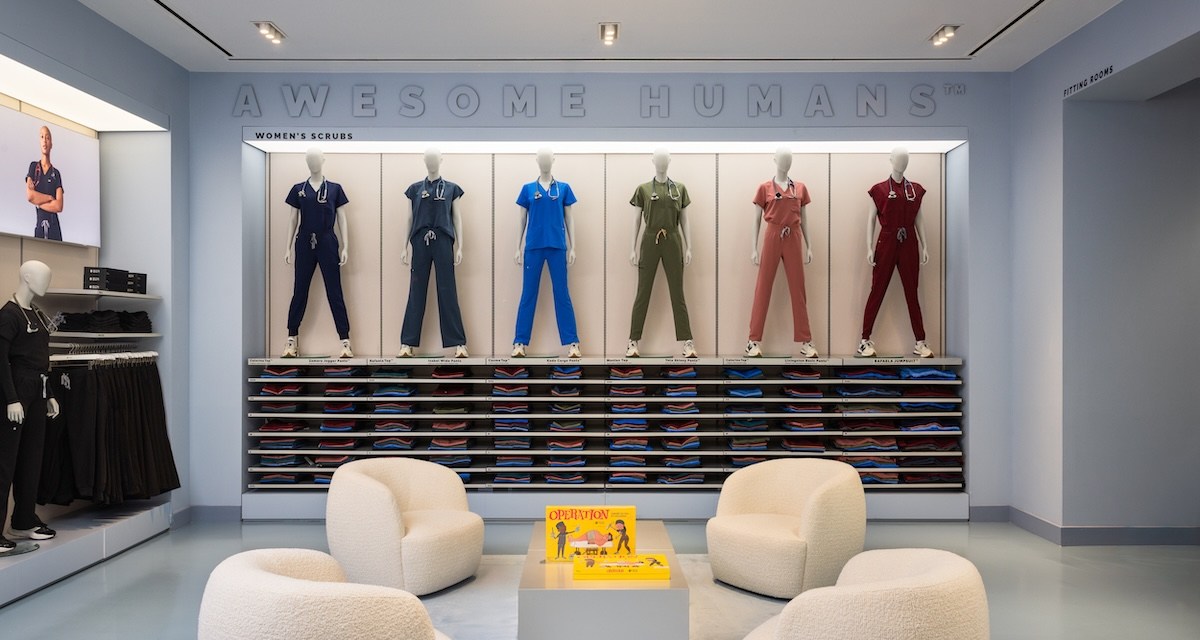
Health-care apparel brand Figs is thinking close to home as it stitches together its store strategy, CEO and co-founder Trina Spear told Modern Retail. “It’s all about proximity to our people [and] to our community, and not just being in a major shopping destination,” she said.
That’s why all of Figs’s stores, which it calls “Community Hubs,” are located near hospitals, medical universities and health-care clinics, per the company. On Jan. 10, Figs will open its latest location, in Chicago, in the Illinois Medical District, home to 560 acres of research facilities, labs, universities and health-care facilities.
Figs has four other Community Hubs, in Los Angeles, Philadelphia, New York City and Houston. The locations sell products like scrubs and compression socks, but they’re also sites for Figs to hold events like wellness workshops, recycling dropoffs and happy hours. In addition, the Community Hubs have personalization stations, where customers can embroider their scrubs and lab coats with decals such as a heart or their company logo.
Figs, which began as a DTC brand in 2013, has focused more on physical retail since opening its first Community Hub in November 2023. Its customers are eager to touch and try on products in person, Spear said. Figs has found that 40% of people coming into its stores are new to the brand. Of those, 30% go on to buy online products, too. “They become truly an omnichannel customer,” Spear said.
To Figs, stores are key to lifting not just overall sales, but also brand awareness. “In order to be an iconic brand for the next 100 years, you need to have stores, and you need to be able to serve your community in all the ways they want to be served,” Spear said. “But we’ve always balanced both growth and profitability. We’re going to just take our time and [open stores] right.”
Rick Patel, who covers Figs for Raymond James, told Modern Retail he agrees with Figs’s “approach to be selective” with its store locations, “given its laser focus on health-care professionals.”
“We anticipate future store openings will also be near health-care hubs,” he said. And while Figs is increasingly selling products that appeal to a wide variety of customers, like loungewear, “We don’t anticipate its target market to expand beyond health care in the near term,” Patel said.
Figs’s financials
Spear declined to say how many new stores Figs will open in 2026. But the brand is upping its store count as it enjoys rapid growth. In November, it reported that its third-quarter net revenue was $151.7 million, up 8.2% year over year. That represented its highest quarterly year-over-year growth in the last two years.
Figs also increased its yearly outlook for the rest of its 2025 fiscal year to project 7% growth. The company’s active customer count is at a record of nearly 2.8 million, and it is expanding its e-commerce operations to 60 international markets, including in Latin America and the Middle East.
However, Figs is still facing challenges. On an earnings call in November, CFO Sarah Oughtred said the company, which makes products in Vietnam and Jordan, expected “ramping sequential tariff pressure” as product costs went up. She added that Figs is taking measures to offset some of this, including lowering discounts and making improvements in returns processing.
“While we do not plan to take any pricing action in 2025, it remains a lever for next year,” she said.
Building community
Figs, which has developed its own fabric technology, grew during the pandemic when demand for scrubs and face masks skyrocketed. After a history of operating losses, Figs achieved profitability in 2020 and went public a year later with a $4.57 billion valuation at the end of its first day of trading.
Today, the vast majority of Figs’s sales are from scrubwear like scrub pants and scrub jackets, although shoppers can buy other pieces like underwear, vests and sweatshirts. Figs also has partnerships with New Balance, Set Active and ArchTek and is outfitting health-care professionals supporting Team U.S.A. through the 2028 Olympics.
Still, gear is just one element of Figs’s value proposition, Spear stressed. Programming and experiences are core to the brand’s expansion plans, especially at its stores. Figs’s two-story location in Philadelphia, for instance, has a coffee bar and holds yoga sessions. Therapists also stop by to chat with customers about their experiences as health-care professionals.
“We call them Community Hubs because they’re not just about shopping,” Spear said. “Although you can get your uniform to go into your job, it’s also about connection and education. … It’s really a place for the community to talk to each other and talk to our associates.”
Figs is taking learnings from its five stores to inform future stores, especially when it comes to formats, experiential retail and square footage. So far, early response to the locations has been positive, Spear said. When Figs opened its Community Hub on the Upper East Side in New York City in November 2025, lines went around the block. “We had hundreds of people,” Spear said. “It was a two-and-a-half-hour [wait].”
“If you build it, people will come,” Spear continued. Still, she said, “At the end of the day, we also don’t need thousands of stores.” While Figs wants to be in every major market with health-care professionals, it’s doing so at a measured pace. “We can do it really intentionally and very strategically,” Spear said.