


Asos, amid a turnaround, is branching out from its digital roots with more pop-ups
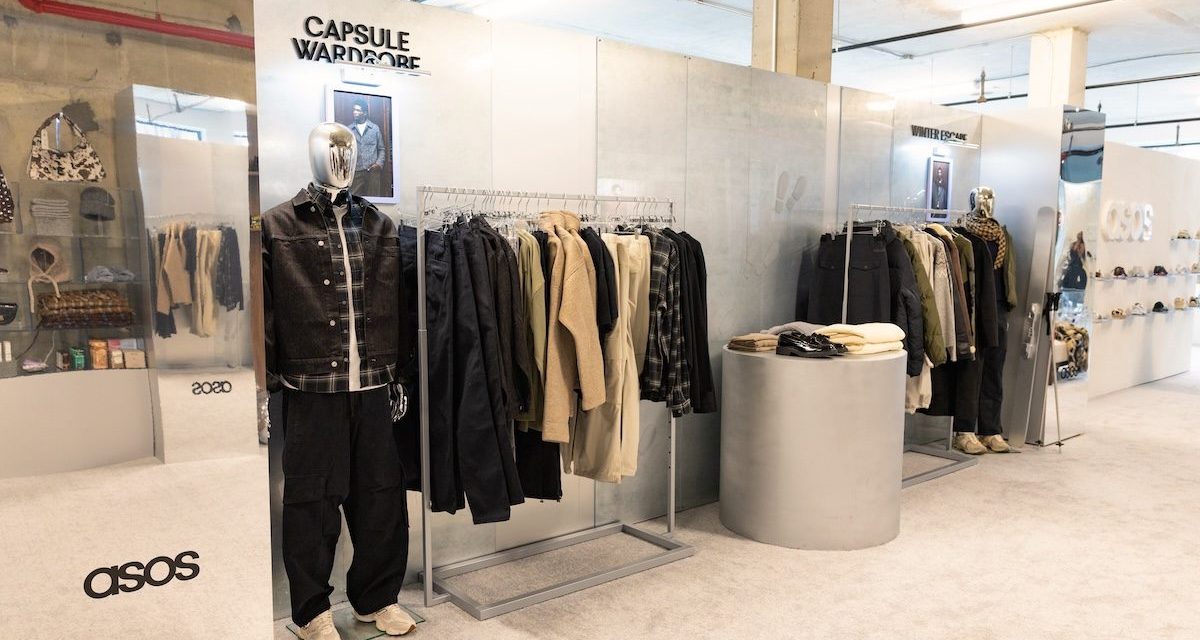
Digital fashion retailer Asos is making physical retail more of a priority as it attempts a continued turnaround.
The company, which is based in the United Kingdom and is popular with Gen Z, debuted as an online business in 2000. In 2023, it made a major change, holding its first-ever pop-up in its home city of London. Asos has now ramped up this playbook, especially over the last six months, as it looks to kickstart growth and gain an edge on competitors. Its latest pop-up opened in New York City on Dec. 5.
Asos, which reported slipping sales in November, has been on a pop-up blitz since the summer. The retailer held its first-ever pop-up in the U.S. in June, in New York City. A month later, it debuted a surf-style pop-up in the Hamptons. It then took a break to hop back across the Atlantic Ocean, where it held a November pop-up in England. Asos’s current U.S. pop-up lasts through Dec. 21 and has a winter wonderland theme.
Physical retail is a newer direction for Asos. The company has always been a “digital-first brand,” Vanessa Spence, evp of brand and creative at Asos, told Modern Retail. However, she said, “We’re increasingly seeing the customer want to experience fashion in person.” Asos is now using pop-ups to collect feedback from shoppers, show off its merchandise, and offer extras like coffee drinks and color analysis sessions. Asos is planning more pop-ups next year in markets like Los Angeles and Miami.
Asos is leaning more into physical retail as it looks to grow revenue and court new shoppers. The company has had a turbulent past few years amid increased competition from the likes of fast-fashion players like Shein. Asos’s revenue for its 2025 fiscal year ending in August was £2.5 billion, down from £2.9 billion in fiscal 2024 and £3.5 billion in fiscal 2023. While the company managed to improve its operating loss — going from £331.9 million in 2024 to £212.3 million in 2025 — it also narrowed its customer base, going from about 19.7 million active customers in 2024 to 17 million in 2025.
Other changes have been afoot at Asos, which, like Boohoo and PrettyLittleThing, saw e-commerce sales explode during the pandemic but soften in years since. The company’s chief financial officer, Dave Murray, stepped down in June, and its board chief, Jørgen Lindemann, stepped down in November. The brand also completed refinancing in November.
In 2024, Asos cut more than 200 jobs at its head office as part of a wider restructuring, and it also sold off a majority stake in Topshop and Topman. To spur growth, the company is now focusing on working with creators, lowering supply chain costs and reducing production times of its owned brands.
Linking physical and digital
Asos, which means “As Seen on Screen,” originated as a site on which shoppers could buy clothes and other products featured on TV and in films. It has since grown into a massive global fashion player and serves more than 200 markets worldwide. Asos carries private brands like Asos Design, as well as global brands like Adidas and Nike.
Most of Asos’s business comes from e-commerce, and that’s unlikely to change. But the company is now brainstorming different ways to boost both digital sales and physical sales. Its pop-ups, for instance, have large screens where customers can browse Asos’s website, see SKUs in other colors and order anything that’s out of stock at the pop-up. “It’s about building that brand love, but also in a way that really complements our global digital approach,” Spence said.
Asos’s shoppers have been receptive to the pop-ups, executives said. “We see real buzz and excitement when we say that we are launching a pop-up, and the social engagement is incredible,” Spence shared. In fact, demand for Asos’s two-week U.S. pop-up in June was “so strong” that Asos made its pop-up in December last three weeks, said Amber Lopez, Asos’s senior marketing manager.
Following the pop-up in June, sales on Asos.com increased by 4% compared to the 12 weeks prior, Asos told Modern Retail. That same pop-up drove more than 4 million views and 52,000 engagements across Instagram and TikTok.
Neil Saunders, managing director at GlobalData Retail, believes that Asos still works best online, but sees why the company would want to experiment with a physical footprint. “The difficulty is translating the huge online offer into something that works in stores, and giving [physical retail] a real distinct point of view,” he told Modern Retail.
“That said, the pop-up shops are as much about visibility as they are about selling,” he continued. “As a primarily online brand, Asos has to stay on the radar of consumers, and a handful of stores help them to do that. However, Asos needs to carve out a more competitive and distinct position overall in 2026.”
Fine-tuning the pop-ups
Asos has made updates to its pop-ups over time. During its June and July U.S. pop-ups, Asos showed off summer dresses but got “a lot of demand” for casual styles like denim and T-shirts, Lopez said. Now, in December, Asos is including more of those styles. It has a denim wall this time around, and it has a cozy-at-home section to highlight PJs and activewear sets.
Asos also actively updates its web assortment based on feedback from pop-up shoppers. “You can learn more about what the customer wants from you,” Spence said. “For example, online, we see really strong performance across occasion wear. But to bring that into the physical space and actually see new demand signals is incredible, because then we can take that back onto the platform and amplify that further. The two [channels] can feed each other.”
In the U.S., specifically, pop-ups give Asos a better idea of what the American shopper is interested in. The U.S. is a “priority territory” for Asos and a major focus going forward, Spence said.
Asos wants to keep evolving its idea of a physical retail space next year, including through community events and smaller pop-ups. At the moment, it remains focused on scaling its in-person strategy, Spence said. When asked about Asos’s chances of opening a permanent store, she said, “We always say, ‘Never say never.'”
“Ultimately, we’re driven by customer demand, and if we see that customers want a permanent space, then we’ll potentially give the customers what they want,” Spence said.