


How a major beverage distributor is infusing AI into its HR and IT processes
On February 11 in NYC, join Modern Retail for AI Marketing Strategies, a one-day event where industry leaders will dive deep into marketers’ experiences with and emerging best practices for integrating AI tools into the key layers of the marketing process.
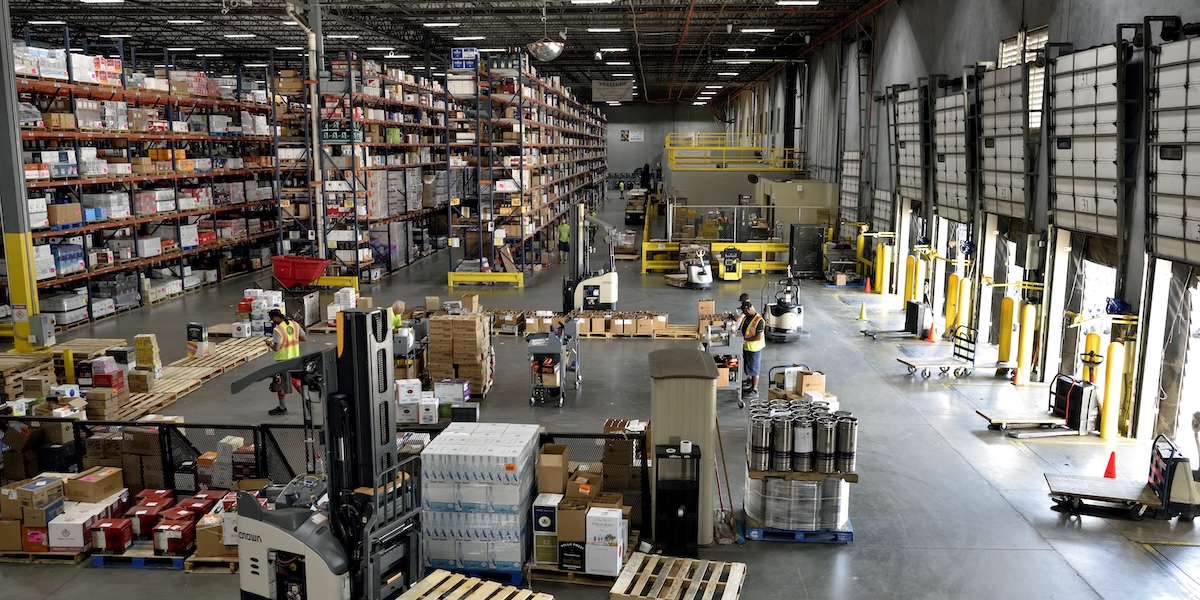
A major player behind the scenes of how retailers get wine, spirits and beer on the shelf has rolled out AI features across many of its internal processes in the name of efficiency.
Southern Glazer’s has implemented AI features from its cloud-based digital workflows platform ServiceNow within its IT and HR departments, Shannon Chapman, senior director of enterprise service management for Southern Glazer’s Wine & Spirits, told Modern Retail.
The beverage distributor spans North and South America, partnering with more than 1,200 suppliers to distribute 11,000-plus brands. The company first implemented ServiceNow software in 2021 and has continued to expand it to multiple applications within the past several years as the use of AI has increased within the platform.
“Look at your business processes. Wherever those biggest bottlenecks are, those are great places to start leveraging [AI],” Chapman said, offering advice to other large organizations. For Southern Glazer’s, those challenges would include sluggishness in answering HR questions, such as about open enrollment, and tech support inquiries.
ServiceNow, initially an IT service platform, has positioned itself as an AI control tower for workflows across HR, customer service and security, according to MarketWatch. The outlet reported in December that ServiceNow has now expanded its reach into cybersecurity through an almost $8 billion deal to buy cybersecurity company Armis. That followed a string of AI-related deals last year aimed to bolster ServiceNow’s AI market share.
For example, in IT, an employee may say their laptop or printer doesn’t work. The inquiry may need to bounce around to a couple of teams as they figure it out. Now, ServiceNow has a feature called “incident summarization” that comes up with a long list of factors that may have caused the issue. That way, the employees don’t have to compile that information themselves.
“It actually goes ahead and summarizes it for them, so that they can quickly get up to speed and do their part to try to troubleshoot as fast as possible and ultimately resolve it as fast as possible,” Chapman said, adding that a similar feature is used within the company’s HR department to summarize cases.
Another feature creates detailed notes on what was resolved after an IT issue is resolved, saving service desk agents from having to write that up. The company has also implemented AI agents for use by IT employees that can summarize knowledge-based articles. For employees throughout the company, the company has implemented an AI search capability with summaries and suggestions.
“It’s an extension of our physical human teams into this digital workforce that can get stuff done after hours,” she said. “Ultimately, our employees and our company are able to work faster, support our customers and suppliers faster, [and] support our own employees faster.”
Chapman emphasizes to her employees that AI adds value and that the company isn’t replacing anyone with AI agents.
“They are added features to help you with your role and with your job, and to make us more efficient, Chapman said.
She added that the company, especially in HR situations, isn’t rushing to put agents in front of employees quickly and is testing to ensure employees are comfortable, especially within a family-owned business where many people have worked for decades.
“It’s just going to be very important, as we introduce more agents or bots to our employee base, that they’re going to resonate [with] our culture,” Chapman said.
Chapman said the company has yet to integrate ServiceNow’s AI feature into its distribution process, but expects it could eventually extract product information from photos of labels, helping warehouse staff add new products to their database.
Others see potential for AI in the supply chain process, as well, including Rohit Tripathi, vp of industry strategy for manufacturing at Relex Solutions, a supply chain planning platform. The company says it has worked with retailers and brands including The Home Depot, Ford South America, PetSmart, Vita Coco and Dollar Tree, among others.
Artificial intelligence has helped companies throughout the supply chain world streamline how they manage inventory, as Modern Retail previously reported.
“When we say ‘AI,’ … it’s much bigger than generative AI, more than the ChatGPTs of the world,” Tripathi said. “It is also all about machine learning, it’s about heuristics. It’s about predictive and probabilistic models.”
In December, Relex launched an AI-powered diagnostics tool that uses agents and Gen AI capabilities to deliver recommendations that analyze operational data and provide insights as to the root cause of stockouts, spoilage and inventory imbalances.
Tripoathi said Relex uses probabilistic AI models — similar to how political organizations call election results before votes are in — to predict which items will need to be replenished based on previous stockouts.
“For all the distributors and manufacturers, the one ultimate metric that matters is on-shelf availability,” Tripathi said. “If your AI can help improve that, that is the real goal. Everything else is just fancy, cool features, which may or may not pay off.”
Chapman, meanwhile, encourages other organizations to experiment with different AI tools and measure the ROI of each one.
“I think a lot of people struggle with getting started [with AI], and trying it out and learning how to pivot,” Chapman added. “Let’s start with something; let’s try to resolve where we think we have those biggest bottlenecks — those biggest pain points, those inefficiencies — and try it out, see how it works. Are we getting the value? If not, OK. We’re going on to something else.”