


Target’s new supply chain facility could be first of many
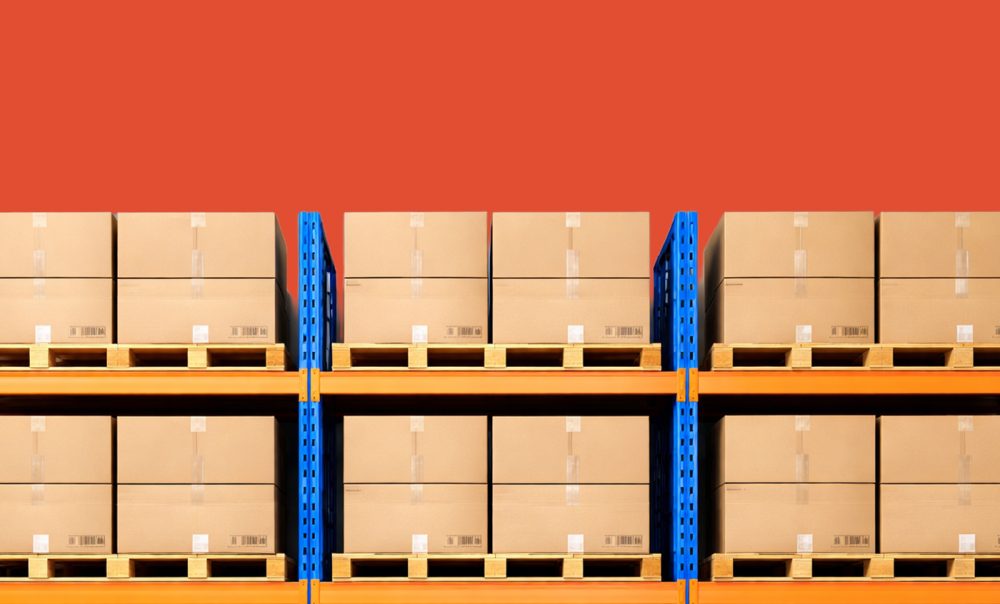
A new Target warehouse in Houston represents more than just a new building serving one region. It’s potentially a new way in which the retailer’s supply chain will operate throughout the U.S.
Last week, Target opened its first “receive center” in Houston, a new kind of facility in its supply chain network. The facility will largely house imported products — often seasonal, bulky or tough-to-forecast items — to avoid them taking up space in distribution centers.
The new center in Houston is a test to understand how such facilities could work for Target moving forward, Sousan Ortega, Target’s svp of field replenishment, global supply chain and logistics, told Modern Retail. It is a pilot for the company to understand whether it came up with the right design and automation for the facility, and whether it works as expected.
“Once we use this as a test site, we’ll start to decide, ‘Is this going to be a future strategy for us?’”
The Houston location will serve six regional distribution centers — including those in Alabama, Kansas and Colorado — as well as a “flow center” in Chicago. Each of those properties serves roughly 75 stores, according to Ortega. Within the supply chain, it sits between regional distribution centers and the ports where items come in from overseas. This is in addition to import warehouses in Washington and Georgia, which serve a similar function.
Target is seeking flexibility
The facility is designed so the regional distribution center — the step before items get to the store — only holds items that are about to ship to the stores. This adds an extra place where products can be stored before getting to the regional facilities. The receive center may also serve as a deconsolidator that unpacks containers from manufacturers before the products ship out to as many as a dozen-plus distribution centers.
The new facility and potential future facilities would allow Target to not have to make decisions on when products will ship to stores, and from where, as far in advance. It provides Target the flexibility to allocate inventory three weeks in advance rather than six months or a year ahead, Ortega said.
Making those decisions in advance can lead to the retailer sending too much stock to store, which would then have to mark it down. Or, it could send too little to a store leading to out-of-stocks and store-to-store transfers.
She used the example of flip-flops. Previously, if a heat wave hit New York, the company wouldn’t be able to quickly divert the sandals there instead of somewhere else, like Phoenix. With the new facility, the company can now hold products like that in the receive center and send them to another region within three weeks.
Target is increasing its square footage in its supply chain while other companies like UPS, FedEx and Macy’s have closed fulfillment centers within the past year as they reconfigured or consolidated their networks.
“It’s a different direction than most are going,” said Russell Hoppes, vp of solutions and delivery at Locus, an AI transportation management system owned by IKEA franchisee Ingka Group. “They’re able to orchestrate their network based on the location and the size of this building.”
Getting products back on the shelves
Target executives designed the receive center to give the company more control over its supply chain and the ability to react to shopping trends more quickly. This comes as the company has worked to improve its on-shelf product availability under the leadership of new CEO Michael Fiddelke in hopes of returning to growth and “reclaiming its merchandising authority.”
“What I often tell my team is: We can’t give the guests a great experience if the inventory isn’t available,” Ortega said.
“What Target is doing here is directionally right. For the last decade, retailers have tried to reconcile two fundamentally incompatible things: … the cost efficiency of centralized distribution and the speed expectations of same-day or next-day delivery,” said Matthew Hertz, founder and CEO of Third Person, a tech platform that connects brands with fulfillment partners. “A purpose-built facility situated between those two worlds suggests Target is getting serious about solving that problem.”
Taylre Stumpf, a senior analyst at Kantar who covers Target, said the new facility could allow Target to more quickly respond to products featured in social media trends and more effectively compete with next-day or same-day services from Walmart or Amazon.
“It’s a step in the right direction for Target to bring back the convenience, the reliability, to hopefully come back to some growth this year,” Stumpf said.
Target shoppers are twice as likely as Walmart shoppers to say their retailer was worse than others at keeping specific items in stock (12% versus 6%, respectively), Kantar’s ShopperScape found in a survey conducted over the past two years.
“Target has been struggling the last few years to really connect with guests; they’ve been struggling with in-stocks,” Stumpf said. That’s a problem, she added, because, in the era of e-commerce and fast delivery, customers in stores are “expecting to find everything — every single product that they see online.”
Still, Hertz said Target has a long way to go to compete with the infrastructure Amazon and Walmart have been building for decades.
“It’s hard not to view this as a bit of a day late and a dollar short,” Hertz said. “Target is playing catch-up in a game where the leaders have an enormous compounding advantage in real estate, automation, data and last-mile density.”
A hub for new technology
The receive center is also a way for Target to test new supply chain technology and a new method of design.
For example, Target is testing a new in-house warehouse management system for the first time in the center. It is also using a new vendor than Target has used in the past for the conveyor systems that ship out cartons. Ortega declined to name the new vendor.
Additionally, the building was designed using a 3D model, including its structural, electrical and mechanical machinery. That allows Target to train team members before they physically enter the facility, letting them get comfortable with the constraints of the space.
“They got comfortable with the equipment, like their powered equipment and their material handling equipment, before they ever had to pick up a box,” Ortega said. “I’ve been here 20 years, and I’ve never had a team member be able to do that.”